| WHOIS privacy shields registrant details from the public, reducing spam and enhancing security. It does not directly impact SEO or algorithmic domain trust, but businesses must balance privacy with transparent on-site signals to maintain user confidence. |
When building a strong online presence, domain trust is one of the most valuable assets your business can establish. Both search engines and customers need confidence that your website is secure, reliable, and credible.
A common question arises: Does enabling WHOIS privacy, the feature that hides your registration details, undermine that trust, or worse, damage your SEO rankings?
This guide explores how WHOIS privacy works, its impact on domain trust and SEO, and how businesses can protect sensitive information while maintaining credibility with both algorithms and human users.
What WHOIS Privacy Is and Why It Matters
Every domain name registration includes details such as the owner’s name, organisation, address, email, and phone number. These are stored in the global WHOIS database, which anyone can query.
WHOIS privacy replaces these details with proxy information supplied by your registrar. Messages sent to the proxy are usually forwarded to the actual domain owner.
Benefits:
-
Shields personal data from spammers, phishers, and identity theft.
-
Prevents unwanted outreach and unsolicited marketing.
-
Adds a layer of security for individuals and businesses.
Drawbacks:
-
Reduces visible transparency for partners, journalists, or investigators.
-
May complicate certain verification processes without alternative methods.
Key fact: Search engines like Google have confirmed that WHOIS privacy is not a ranking factor. SEO success and domain trust rely instead on content quality, backlinks, SSL, and site performance.
WHOIS Privacy and Domain Trust: Algorithmic vs Human Perception
Algorithmic Trust
Search engines assess domain trust based on signals such as:
-
Content quality and topical relevance
-
Backlink authority
-
HTTPS and SSL security
-
Site performance and Core Web Vitals
-
Historical indexing and crawl behaviour
WHOIS visibility plays no role in these algorithmic evaluations.
Human Trust
For people, however, WHOIS privacy can raise questions. Journalists, investors, or potential customers may view a redacted WHOIS record as a lack of transparency.
Solution: Keep WHOIS privacy enabled, but counterbalance it with trust signals such as:
-
A detailed About page
-
Verified business address and contact channels
-
SSL certificates and visible security badges
-
Accreditation numbers or regulatory details
This ensures you maintain both privacy and credibility.
| Pro Tip: Add your business to trusted directories and citation sites. This strengthens domain trust by validating your brand independently of WHOIS while improving local SEO visibility. |
Practical Impacts of WHOIS Privacy
SSL Certificates & Verification
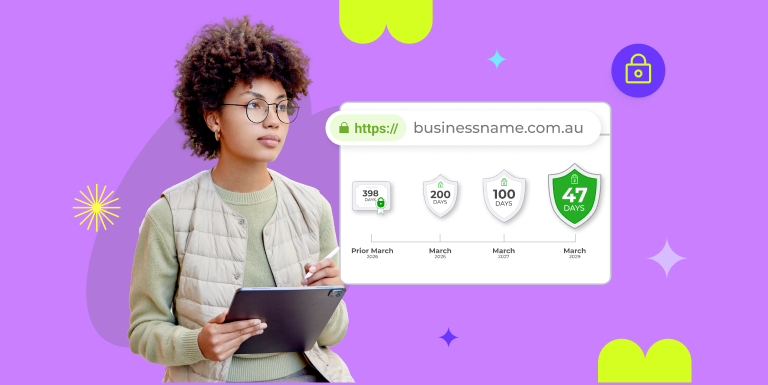
Certificate Authorities now rely on DNS or HTTP methods for Domain Control Validation (DCV) instead of WHOIS email. With privacy enabled, switching to these modern methods ensures uninterrupted SSL renewals.
| Also Read: Understanding SSL Certificates for .com.au Domains and Their Importance |
Outreach & Partnerships
Link-building teams and partners can no longer rely on WHOIS. Instead, publish a monitored contact email (e.g., [email protected]) or a newsroom page.
Legal & Compliance Notices
Masked WHOIS data may require registrars to act as intermediaries in disputes. While slower, this adds protection for registrants against unsolicited claims.
| Pro Tip: Regularly audit your domain portfolio. Expired domains, unsecured subdomains, or outdated privacy settings, even if masked, can weaken domain trust and increase risk. |
Recommendations by Business Type
SMEs
-
Enable WHOIS privacy to protect personal data.
-
Maintain a clear Contact page with your registered business address.
-
Use SSL, reviews, and trust seals to boost credibility.
Enterprises
-
Use registrar services that bundle privacy, transfer locks, and monitoring.
-
Maintain TLD-specific privacy rules internally.
-
Train staff on alternative domain verification methods.
Agencies
-
Educate clients that WHOIS privacy does not hurt SEO.
-
Use branded outreach emails and verifiable bios instead of WHOIS.
-
Standardise non-WHOIS verification workflows.
Developers / DevOps
-
Automate SSL validation with DNS/HTTP in CI/CD pipelines.
-
Secure registrar accounts with 2FA and role-based access.
-
Store admin contacts in Secrets Manager for controlled access.
| Also Read: Beyond Passwords: Two-Factor Authentication and Your Security |
Decision Framework & Action Checklist
Decision framework:
-
Handle sensitive data? → Enable WHOIS privacy.
-
Customer-facing trust critical? → Use transparency pages.
-
Large portfolio? → Choose registrars with automation and monitoring.
Action checklist:
- Enable WHOIS privacy where available
- Migrate SSL validation to DNS/HTTP
- Publish trust signals (About, Contact, Reviews)
- Lock registrar accounts with 2FA
- Train staff on modern verification
How to Check WHOIS Privacy Status
You can verify your WHOIS status by running a lookup. If privacy is active, proxy details will appear instead of your own.
Need to prove ownership without disabling privacy? Use a DNS TXT record or upload an HTTP file, both confirm control without exposing sensitive information.
| Pro Tip: Schedule quarterly WHOIS checks. Privacy settings can lapse after renewals or registrar changes, leaving your details unintentionally exposed. |
Strengthen Domain Trust While Protecting Your Privacy
WHOIS privacy shields sensitive data without harming SEO or algorithmic trust. True credibility comes from content, backlinks, site security, and transparent on-site signals. By pairing privacy with a clear Contact page, verified email, and business details, you protect your identity while enhancing trustworthiness.
For businesses managing multiple domains, professional tools make governance and verification simple.
Take the smarter route: secure your domain trust, safeguard privacy, and simplify management with Crazy Domains. We offer hosting and domain services—your trusted partner for safer, more credible online growth.