As we move through 2025, the value of premium, memorable digital real estate is increasing across both the primary and secondary markets.
In response to economic pressures, global instability, and a renewed focus on digital presence, businesses are rethinking their domain strategies. It’s no longer just about owning a name; it’s about securing trust, authority, and long-term relevance in an increasingly competitive online landscape.
New extensions are gaining momentum, yet .com remains the leader in visibility, recognition, and resale value.
This guide covers the key trends shaping domain ownership in 2025. Whether you manage, invest in, or build on domains, these insights will help you stay ahead.
6 Key Trends That Are Shaping the Future of Domain Names
Here’s a snapshot of the major trends driving change in the domain landscape:
Trend #1: The Rise of New gTLDs Is Redefining How Digital Identity Is Built
Who is this trend for?
- Brand-first startups
- Agencies managing multiple client sites
- Domain investors tracking emerging value
- Enterprises looking for clear namespace differentiation
- Tech founders launching in specialised industries
While overall domain registrations grew by a modest 1.2% year-over-year, it was new gTLDs that accounted for the largest gain, adding 5 million new domains:
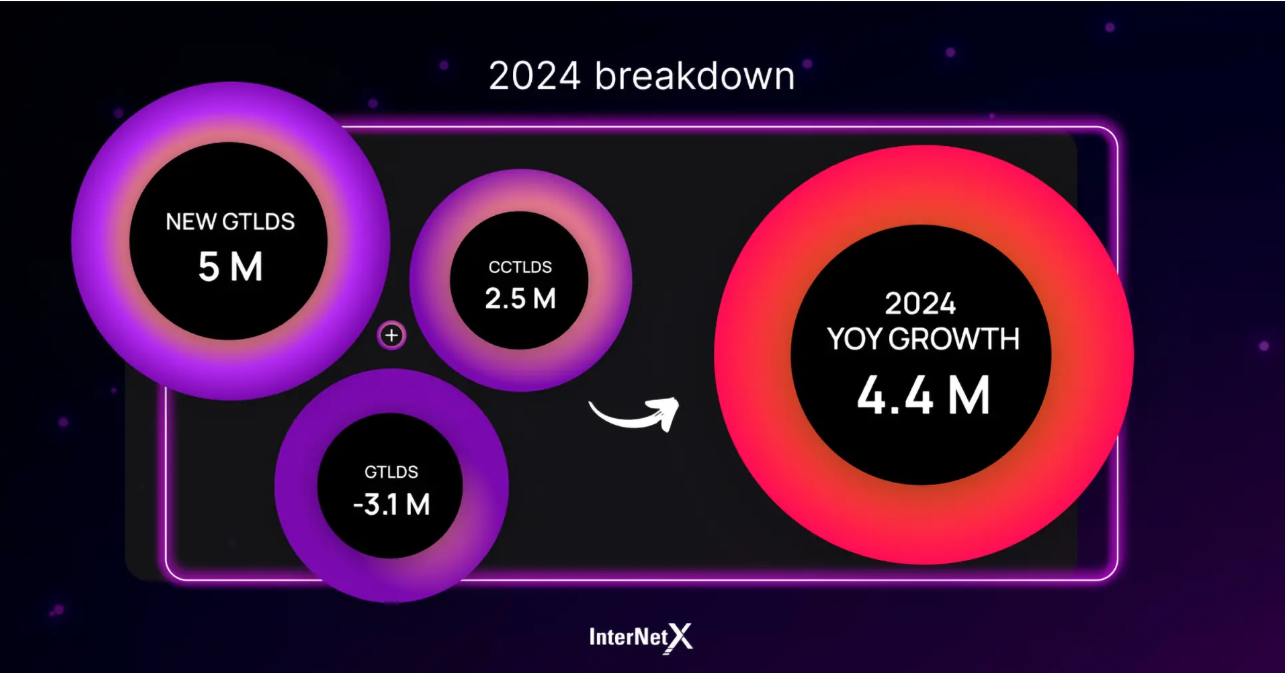
Meanwhile, legacy gTLDs such as .com and .net experienced a 2.1% drop, losing ground due to market saturation and shifting user priorities.
What This Means for You:
- Site owners are switching to domain extensions that better fit their brand, industry, and community as.com gets more crowded and competitive.
- New gTLDs, such as.Tech, .ai, shop, etc., provide versatile branding options that aren’t necessarily possible with traditional TLDs.
- Expect this diversification to pick up speed starting in 2024. Alternative TLDs will only become more appealing as niche markets, AI-first startups, and decentralised platforms continue to grow. This change is not merely aesthetic; it is strategic.
Questions to ask:
- Does your current domain extension align with your brand’s long-term positioning?
- Are you missing opportunities in untapped gTLD spaces?
- Could a new gTLD signal innovation or clarity to your audience?
- Are your domain assets prepared for SEO and recognition in a more fragmented TLD ecosystem?
The takeaway: The future of domain names won’t be owned by just a few extensions. It will be shaped by how well your domain reflects who you are and where you’re going.
Trend #2: Expanding Internet Access Is Fueling ccTLD Growth in Emerging Markets
Who is this trend for?
- Global brands entering new regions
- Hosting providers and registrars
- Domain investors eyeing untapped TLDs
- Local entrepreneurs building regional digital presence
- Policy advisors and digital infrastructure planners
As of February 2025, 5.56 billion people, or 67.9% of the global population, were actively using the internet:
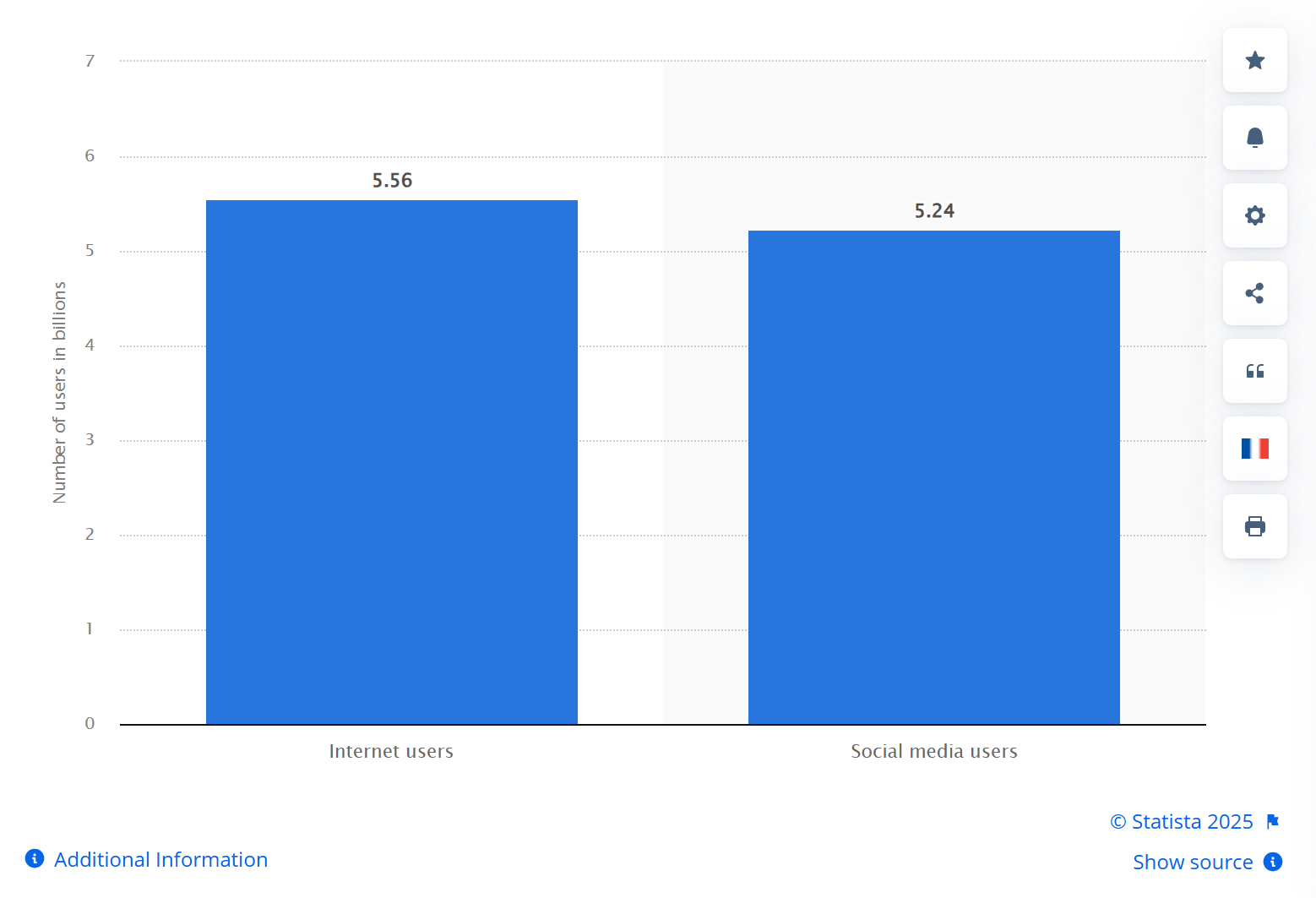
As a result, hundreds of millions of new users will be joining the internet, many of whom will be in high-growth areas like Sub-Saharan Africa, Latin America, and South Asia.
Online activity is rising significantly in nations like Brazil, Mexico, Nigeria, China, India, and others, which is driving up demand for locally relevant digital infrastructure, especially in domains.
This demand is translating directly into growth in ccTLDs. Country-code domains such as .de, .ru, and .br are rapidly climbing the global charts and ranking among the top 10 most popular TLDs worldwide:
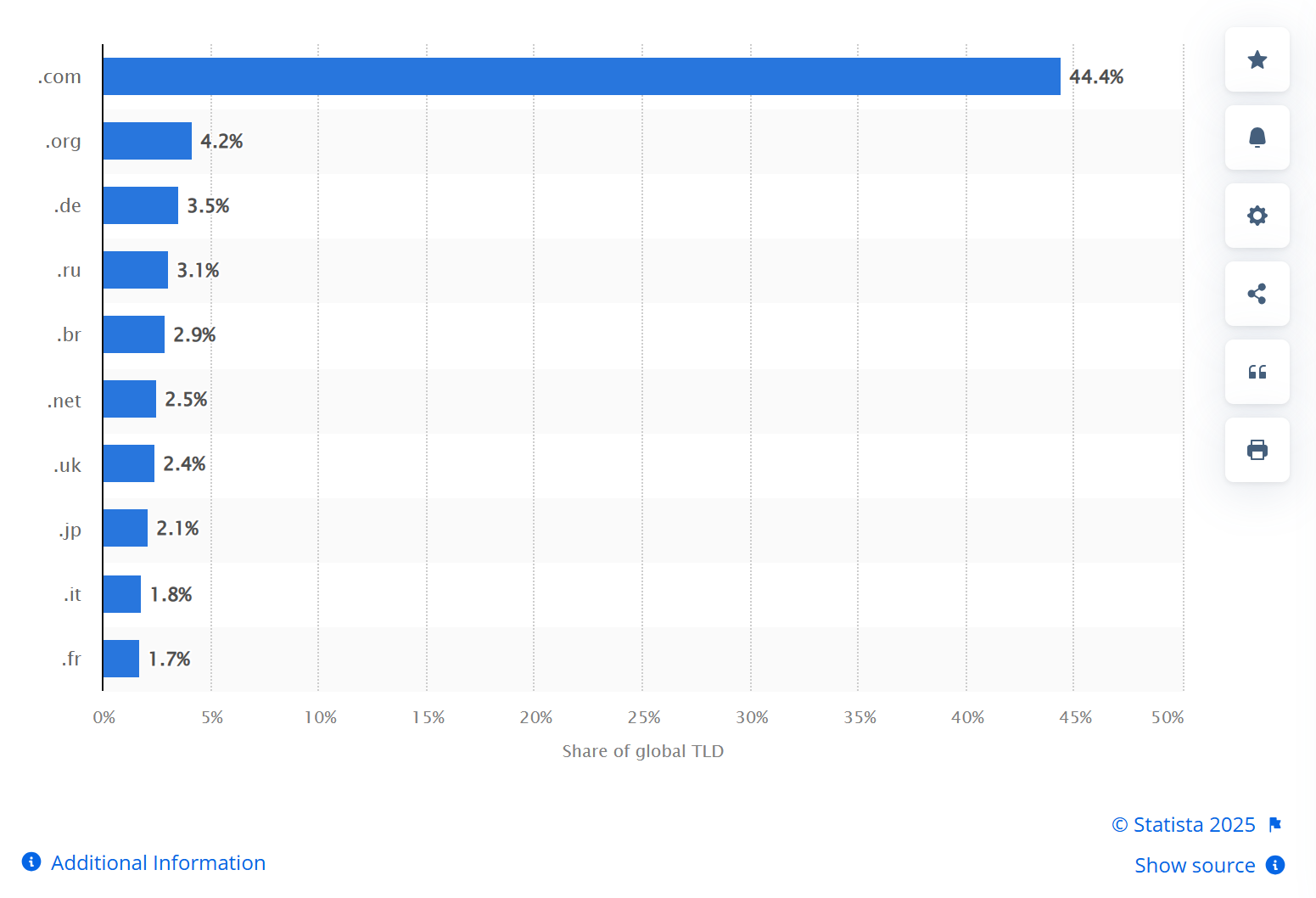
These domains are not only gaining volume, but they’re also gaining trust within their respective regions.
What This Means for You:
- The trend towards local top-level domains (TLDs) is anticipated to pick up speed starting in 2024. In their domain strategies, regional companies are giving national identity top priority.
- Global companies entering these markets are also increasingly registering local ccTLDs to build trust, meet compliance standards, and localise customer experience.
- IDN versions are adding even more accessibility for native-language users.
- This trend isn’t short-term. As infrastructure improves and more people gain consistent access to the internet, domain registrations in these emerging markets will continue to climb, particularly for local and culturally relevant extensions.
- Another major shift is coming to the domain space. ICANN has officially confirmed that a new application window for custom domain extensions will open in spring 2026.
- Businesses, brands, and communities now have a new chance to register domain endings that closely relate to their identity and mission. This is the first significant expansion since 2012. This gives everyone thinking about their online presence in the long run more control, visibility, and differentiation.
Questions to ask:
- Are you registered under local ccTLDs in the markets where your customers live?
- Do your domains reflect a commitment to regional presence and trust?
- Could local TLDs help your brand connect better with non-English-speaking audiences?
- Are you building a scalable domain portfolio that includes growth markets?
The takeaway: A connected world means a more diverse domain ecosystem. If you’re only using global TLDs, you’re missing out on both opportunity and relevance.
Trend #3: Repurposed ccTLDs Are Powering a New Wave of Niche Branding
Who is this trend for?
- Tech startups seeking standout domain names
- SaaS founders building developer-first platforms
- Domain investors looking for undervalued TLDs
- Brand strategists and digital marketers
- Registrars promoting alternative extensions
Country-code top-level domains (ccTLDs) are breaking free from their geographic origins. Starting well before 2024 and gaining pace into 2025, domains like .ai (Anguilla) and .io (British Indian Ocean Territory) are now far better known for their industry relevance than their country of origin.
.ai has effectively become the go-to for artificial intelligence companies, while .io remains a top pick for developers and product-led startups. This usage shift shows no signs of slowing.
But rising demand comes with rising prices; .ai premium has climbed sharply in the last few months:
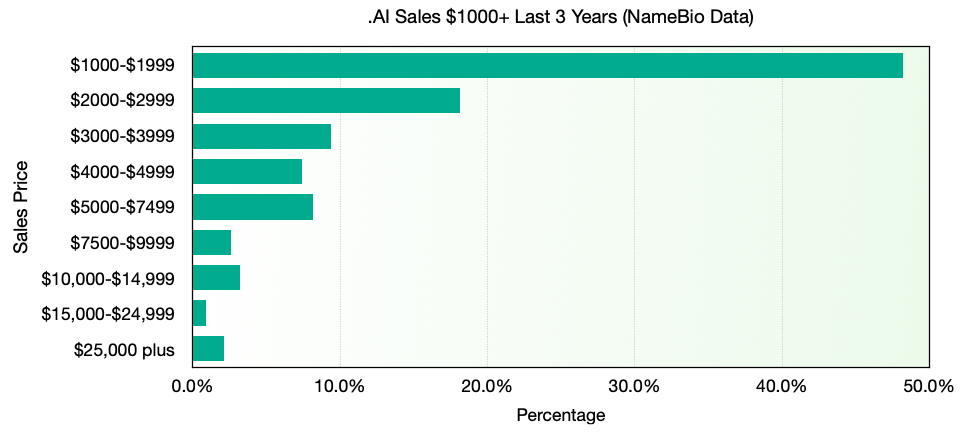
That’s opening the door for a new tier of ccTLDs poised for broader use: extensions like .cc, .cx, .la, and .nu. These alternatives are affordable, widely available, and backed by growing interest from startups seeking creative yet clean namespace solutions.
Importantly, Google treats these ccTLDs as generic, meaning there’s no SEO penalty or geographic targeting bias, a key factor that makes them attractive for global use. As availability shrinks in traditional gTLDs and premium pricing limits options in popular ccTLDs, repurposing lesser-known country codes is becoming a smart move for those building a brand online.
What This Means for You:
- Expect demand for non-traditional ccTLDs to expand well into 2025 and beyond.
- Businesses are seeking flexibility, originality, and availability, and ccTLDs that function similarly to gTLDs are filling that gap.
Questions to ask:
- Is your brand stuck competing for high-cost domains in saturated namespaces?
- Could a lesser-known ccTLD give you a shorter, cleaner, or more brandable option?
- Are you evaluating domain extensions based on function and relevance, or just familiarity?
- Have you considered which ccTLDs Google treats as generic for SEO flexibility?
The takeaway: The line between ccTLDs and gTLDs is blurring. If you’re looking for an edge in a crowded digital landscape, the next great domain opportunity may be hiding in plain sight; just not where you expected it.
Trend #4: Security by Default: NIS2 and DMARC Are Raising the Bar
Who is this trend for?
- Domain registrars and hosting providers in the EU and beyond
- Security-conscious brands and email senders
- SaaS platforms offering domain or email infrastructure
- IT teams overseeing digital compliance and infrastructure
- Domain investors valuing secure, reputation-strong assets
As cyber threats continue to grow in scale and sophistication, 2025 marked a turning point in securing domain infrastructure. Two key developments are driving this shift:
1. The NIS2 Directive: Security and accountability for registrars
From October 2024, the EU’s NIS2 Directive (Network and Information Security 2) comes into full effect. It applies to a broad range of digital service providers, including domain registrars and DNS providers.
This means registrars must:
- Implement stronger DNS security and WHOIS data accuracy
- Report security incidents within tight timeframes
- Enforce stricter identity verification for domain holders
Even businesses outside the EU will feel the ripple effects if they serve European customers or partner with EU-based providers.
2. DMARC Requirements from Major Mail Providers
Starting in February 2024, Google and Yahoo made DMARC mandatory for bulk email senders. This is the first time that large providers are actively implementing DMARC (Domain-based Message Authentication, Reporting and Conformance), even though it has been in place for years.
By letting domain owners choose which email servers are permitted to send on their behalf, DMARC helps prevent spoofing and phishing.
In 2025, more businesses are expected to adopt enforced policies (such as quarantine or rejection) as email authentication becomes essential for inbox placement and brand trust.
What This Means for You:
From 2024 onwards, domain security is no longer optional. With both infrastructure and communications under scrutiny:
- Built-in compliance solutions like hosted DMARC records or automatic reporting dashboards allow registrars and hosting companies to stand out from one another.
- If brands neglect to properly deploy DMARC, they run the risk of email delivery problems and reputational damage.
- Particularly in regulated markets, domains without DNSSEC, precise WHOIS, or security best practices may become less valuable.
- Compliance with NIS2 could become a trust signal for customers and partners
This is not just a European story; regulations are trending globally, and DMARC enforcement is gaining traction in markets like Australia, the US, and Brazil.
Questions to Ask:
- Does your domain portfolio meet the security expectations of today’s users and regulators?
- Are you offering (or using) automated DMARC management tools to reduce complexity?
- Could stricter DNS and WHOIS policies help you stand out in a trust-driven market?
- How will your brand or platform handle evolving compliance mandates across regions?
The takeaway: Security is no longer an afterthought. Whether you’re sending emails, registering domains, or managing hosting infrastructure, compliance and trust must be baked into your offer. DMARC and NIS2 are just the beginning of a broader shift toward security by default.
Trend #5: Evolving Business Models Are Reshaping Domain Commerce
Who is this trend for?
- Hosting providers and domain registrars
- Digital entrepreneurs building platform-based services
- Investors and operators in the aftermarket domain space
- SaaS providers expanding into web and email infrastructure
- Marketing leaders in the domain and hosting industry
The traditional “domain + hosting + email” bundle is no longer enough. From 2024 onwards, the domain industry is moving toward flexible, modular service models that respond to changing customer needs, competitive consolidation, and shifting user expectations.
1. From static bundles to dynamic platforms
Major players are consolidating. M&A activity is expected to continue in 2024 and 2025, with hosting companies, registrars, and SaaS providers merging to create integrated ecosystems that offer a comprehensive range of services, from DNS to website builders and customer service dashboards.
In response, smaller players are pivoting from one-size-fits-all bundles to niche, value-added services such as:
- Domain leasing and financing options
- Access to aftermarket and premium domains
- Advanced DNS services for faster performance
- Security add-ons like hosted DMARC, DNSSEC, and SSL automation
- Self-serve portals with robust analytics and account controls
For many domain businesses, this presents an opportunity to reposition themselves as “domain-as-a-service” providers, offering flexible, API-driven, white-label solutions for resellers and digital agencies.
2. Marketing tactics are maturing, too
With digital attention becoming harder to capture, domain and hosting brands are upgrading their marketing playbooks. While SEO and paid media remain foundational, new approaches are gaining traction:
| Strategy | Why It Matters |
| Short-form video (TikTok, Reels, YouTube Shorts) | Drives discovery, even in B2B verticals |
| Influencer partnerships | Helps brands tap into niche domain investor communities |
| Social media DMs for support | Makes onboarding and support more human and direct |
| Community building via Discord and Reddit | Fuels word-of-mouth in specialised subcultures |
Early adopters of these tactics are already seeing results, particularly when targeting underserved audiences, such as creators, micro-businesses, and Gen Z-led startups.
What This Means for You:
From 2024 onwards, standing out in the domain space will mean offering more than just a checkout form. Customers now expect:
- Customisation in the services they select and the manner in which they obtain them
- Pricing, leasing, and subscription alternatives that are flexible
- Conformity to values inspired by purpose, particularly for younger users
Better experience design, service tiering, and bundling create growth prospects for providers. It indicates a definite change for investors and strategists: domain infrastructure is growing more service-rich, content-driven, and customer-centric.
Questions to Ask:
- Are you combining your services in a way that mirrors the growth and purchasing patterns of your clients?
- Could you expand into other markets with flexible solutions like white-label platforms or domain leasing?
- Are your marketing strategies changing to reflect your target population, especially younger online shoppers?
- Does your brand convey more than just price?
The takeaway: The domain business of the future isn’t just about selling names; it’s about enabling identities, services, and experiences. Those who build flexible, value-rich ecosystems will have the edge.
Trend #6: Blockchain-Based Domain Names Are Reshaping Digital Ownership
Who is this trend for?
- Crypto-native businesses and NFT marketplaces
- dApp developers and Web3 communities
- Digital identity platforms
- Domain investors exploring decentralised assets
- Tech-forward startups aiming for censorship resistance
Domain names are essential to the ongoing transition to decentralised internet infrastructure. Blockchain-based domain names, like.eth,.crypto, and.nft, are becoming more popular as ownership-focused substitutes for conventional domains.
These names do not require registrars, DNS hierarchies, or ICANN oversight because they are stored on public blockchains (such as Ethereum or Polygon).
As of early 2025:
- Over 5 million blockchain domain names have been registered across platforms like Unstoppable Domains and ENS.
- NFT marketplaces and DeFi platforms are increasingly using blockchain domains as wallet identifiers or branded URLs.
- Global awareness of decentralised digital identity is expanding, especially in privacy-conscious markets and communities.
Why Blockchain Domains Matter
| Feature | Traditional Domains | Blockchain Domains |
| Ownership | Rented via registrar | Fully owned, no third party involved |
| Renewal | Annual fees | One-time purchase |
| DNS Control | Centralised | Decentralised and censorship-resistant |
| Use Cases | Websites and email | Wallets, dApps, Web3 identity |
This evolution goes beyond domain naming; it’s about owning your digital identity in a decentralised world.
What This Means for You:
- Web3 adoption is expected to grow as AI, decentralised finance, and digital identity solutions converge.
- Early adopters in the fintech, crypto, and tech industries are gaining brand-first-mover advantages by securing unique blockchain domain names.
- As browsers and wallets continue integrating blockchain domain support, we’ll see greater utility and visibility in mainstream usage.
- Still, blockchain domains remain outside traditional DNS systems, meaning they require compatible browsers or plugins, something that may limit near-term adoption for consumer-facing brands.
Questions to Ask:
- Have you secured your brand name as a blockchain domain before someone else does?
- Could a blockchain domain improve trust or security for your Web3 product?
- Are your tech teams prepared to integrate decentralised domain infrastructure into your wallet or dApp?
- Does your domain strategy include both Web2 and Web3 visibility?
The Takeaway: Blockchain-based domains are not a trend to ignore; they represent a new layer of digital ownership and identity. While traditional domains remain dominant, the next chapter of the internet is decentralised, and your domain strategy should reflect that.
Secure Tomorrow’s Domains Today with Crazy Domains
The market is shifting rapidly. AI tools are transforming the way names are chosen, Web3 domains are gaining momentum, and local extensions are becoming increasingly crucial for regional growth. These aren’t just trends. They’re signals.
If you want to remain visible and credible, you must act quickly. If you wait, you can lose out to competitors who move more quickly. Digital-first branding is becoming unavoidable, supply is decreasing, and prices are increasing.
Crazy Domains helps you stay ahead in this regard. You get everything in one place: fast search, reliable registration, and the tools to scale your domain strategy as you grow. Whether you’re building your first brand or expanding across new markets, you’ll find the support and infrastructure to match your pace. Get started today!
FAQs
What are the key domain name trends for 2025?
In 2025, domain strategy is shifting toward clarity, purpose, and precision. The biggest trends include:
- A surge in premium domain purchases
- Increased interest in blockchain-based domains
- A strong focus on SEO optimisation through domain naming
Many businesses are now moving away from traditional .com extensions and choosing domains that better reflect their industry and target audience.
How will the new domain extensions impact branding?
New TLDs offer instant recognition and clarity. For example:
- A .TECH domain signals innovation
- A .SHOP domain conveys a clear e-commerce offering
- A .DESIGN or .STUDIO domain builds instant creative credibility
These targeted domains enable businesses to convey their purpose at a glance, thereby increasing trust and enhancing user engagement.
What role will SEO play in domain name trends in 2025?
SEO is playing a bigger role in domain selection than ever. Businesses are now choosing domains that:
- Include keywords relevant to their services
- Use TLDs that reinforce industry relevance
- Help improve click-through rates and search engine visibility
With AI playing a larger role in search rankings, a clear and descriptive domain name offers both branding and algorithmic advantages.
Are blockchain domains like .ETH and .CRYPTO worth investing in?
Blockchain domains offer benefits such as:
- Full ownership without third-party oversight
- Censorship resistance
- Integration with Web3 wallets and dApps
However, these domains aren’t yet universally accessible—many require plugins or special browsers, limiting reach. They are best suited for tech-savvy investors or Web3-native brands.