|
Browser trust depends on invisible systems working flawlessly, from certificate renewals to strict transport policies. Automation gaps, missteps in enforcement and weak signals quickly surface as warnings that disrupt transactions and erode user confidence. |
Last quarter a retail site’s Black Friday campaign collapsed within minutes: customers were greeted by a red-screen browser warning after a forgotten certificate renewal, sales plummeted and social media lit up with doubts about security. Situations like this show that the familiar padlock icon hides deeper dependencies.
“Beyond the padlock” encompasses the entire certificate lifecycle, the behaviour of HTTP Strict Transport Security (HSTS), and the wider browser trust signals that reassure customers.
This blog provides decision-ready guidance so businesses can operationalise those controls, reduce outages and keep users confidently transacting online, the core of SSL Beyond the Padlock.
What Users and Businesses Are Trying to Solve
Modern customers abandon carts the moment a site feels unsafe; organisations therefore aim to eliminate any hint of insecurity. They want to stop browser warnings, prevent downtime and maintain seamless customer journeys. The business problems are clear:
- Expired or mismanaged certificates triggering trust errors
- Aggressive or poorly planned HSTS settings that lock out customers
- Misconfigured subdomains undermining security posture
- Weak visible trust cues that erode conversions
This guide helps decision-makers blend automation, policy, and staged rollouts for the certificate lifecycle, HSTS, and browser trust signals, while keeping TLS configuration consistent and resilient.
Certificate Lifecycle Management: Making Renewals a Business Process
Even the strongest cryptography fails if the certificate behind it lapses. Treating renewal as a scheduled chore is no longer enough; it must become a disciplined business process.
Why Certificate Lifecycle Is Business-Critical
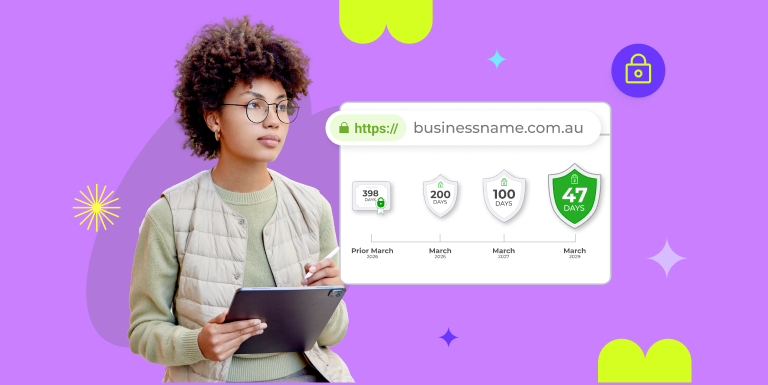
Public certificate lifetimes keep shrinking, and validation rules tighten each year, forcing more frequent renewals and stricter domain checks. Every missed renewal surfaces instantly as a browser error that can halt revenue and damage brand reputation. Automation and strong governance are therefore non-negotiable.
Components of a Robust Lifecycle Programme
- Automated issuance and renewal: Use ACME-based clients or managed services integrated with CI/CD pipelines and load balancers.
- Secure key handling and role-based access: Store private keys in hardware modules or secure vaults; limit issuance rights to least privilege.
- Multi-environment strategy: Separate staging and production certificates, validate via Certificate Transparency and enable OCSP stapling for real-time revocation checks.
- Monitoring and multi-vantage expiry alerts: Combine certificate transparency feeds, synthetic probes and diverse alert channels. Never rely on a single email reminder.
- Emergency rollback and fallback plans: Keep documented procedures and spare, pre-validated certificates ready for rapid swaps under pressure.
Practical Playbook and Decision Criteria
Choose between in-house automation and a managed certificate service by weighing domain count, renewal frequency, SLA targets and compliance needs.
Minimum acceptance criteria include automatic renewals, clear alert thresholds, a tested renewal path and runbooks for incident response. Convenience must be balanced with control: outsourcing speeds renewals but demands assurance that key storage and recovery align with your risk appetite.
| Also Read: Is Your Website Truly Safe? 5 Reasons Why You Should Get an SSL Certificate |
HSTS: Powerful Protection With Irreversible Choices
HSTS forces browsers to interact with your site exclusively over HTTPS, blocking downgrade and SSL-stripping attacks. The power is significant, but mistakes can be unforgiving.
HSTS Fundamentals for Business Stakeholders
The Strict-Transport-Security header instructs browsers to use HTTPS for a duration specified by max-age, optionally covering all subdomains (includeSubDomains) and allowing addition to browser preload lists (preload). Without preloading, protection starts only after a successful HTTPS visit, the “first-visit” gap.
Staged Deployment Strategy
A safe rollout path looks like this:
- Enforce HTTPS on all endpoints, then publish HSTS with a short max-age (e.g., one week).
- Inventory every subdomain and third-party integration (analytics, CDNs, APIs, and admin interfaces) to confirm HTTPS availability.
- Monitor error telemetry, certificate renewals and access logs for at least two renewal cycles.
- Gradually extend max-age; only after full confidence, consider includeSubDomains.
- Maintain a rollback plan: if errors surface, reduce max-age before customers’ caches lock in the longer value.
Preload Considerations and When to Submit
Submitting your domain to the browser preload list removes the first-visit risk but is irreversible until a new browser version ships. Decision factors include customer exposure, subdomain stability and renewal automation maturity.
If any subdomain cannot guarantee continuous HTTPS, avoid includeSubDomains or defer preloading. A simple rule: preload only when you have proven HTTPS coverage, robust renewal workflows and no anticipated domain restructuring.
| Also Read: HTTPS as a Ranking Factor: How Security Affects SEO and Search Rankings? |
Browser Trust Signals: The Technical and Perceptual Layers
Technical correctness and perceived assurance must work together. Valid certificates, modern TLS versions and enforced HSTS form the invisible layer; the visible layer is the padlock, HTTPS in the URL and carefully placed trust badges.
Display trust cues near checkout and login flows, but keep language factual, never promise security you cannot guarantee. Trust badges alone cannot compensate for expired certificates; align them with solid TLS hygiene to reduce bounce rates and lift customer confidence.
Defence-In-Depth: Complementary Controls and Operational Practices
A layered approach limits single points of failure and speeds recovery.
Complementary Technical Controls
- Enforce modern TLS (v1.3, strong cypher suites) and disable outdated protocols.
- Enable OCSP stapling to shorten revocation checks and surface issues faster.
- Add Content Security Policy (CSP) and secure cookie flags to reduce cross-site attack surfaces.
Operational Practices for Resilience
Create a responsibility matrix covering every domain, subdomain and third-party dependency. Maintain runbooks for certificate expiry, HSTS misconfiguration and emergency replacements.
Run regular drills: simulate expiries, validate fallback certificates and audit domain inventories. Strike a balance between strict HSTS settings and operational flexibility to keep recovery options open.
| Pro Tip: Reduce DNS TTLs to five minutes 48 hours before any planned certificate rotation or HSTS change. Shorter caching times prompt clients to fetch fresh records quickly, smoothing migration. Keep an air-gapped, pre-validated wildcard certificate as an emergency fallback in case your primary CA experiences an unexpected outage. |
Build Trust That Browsers Enforce
Treating certificates, HSTS and browser trust as a unified capability slashes outage risk and protects conversions. Act now on two priorities: automate the entire certificate lifecycle and stage HSTS roll-outs with care before preloading.
Crazy Domains helps businesses automate certificate renewals, manage domains securely and reduce the risk of browser trust failures. Our hosting, SSL tools and expert support keep security signals consistent as sites scale and evolve.
Don’t let browsers scare customers away. Manage certificates and trust signals with Crazy Domains now!