
You’ve posted Instagram posts, pushed email campaigns, and kept your brand’s social voice alive, yet your audience doesn’t seem to be engaging.
You hope for likes, shares, mentions, anything that makes your brand more visible. But at this point, your social media marketing strategy feels like effort without direction.
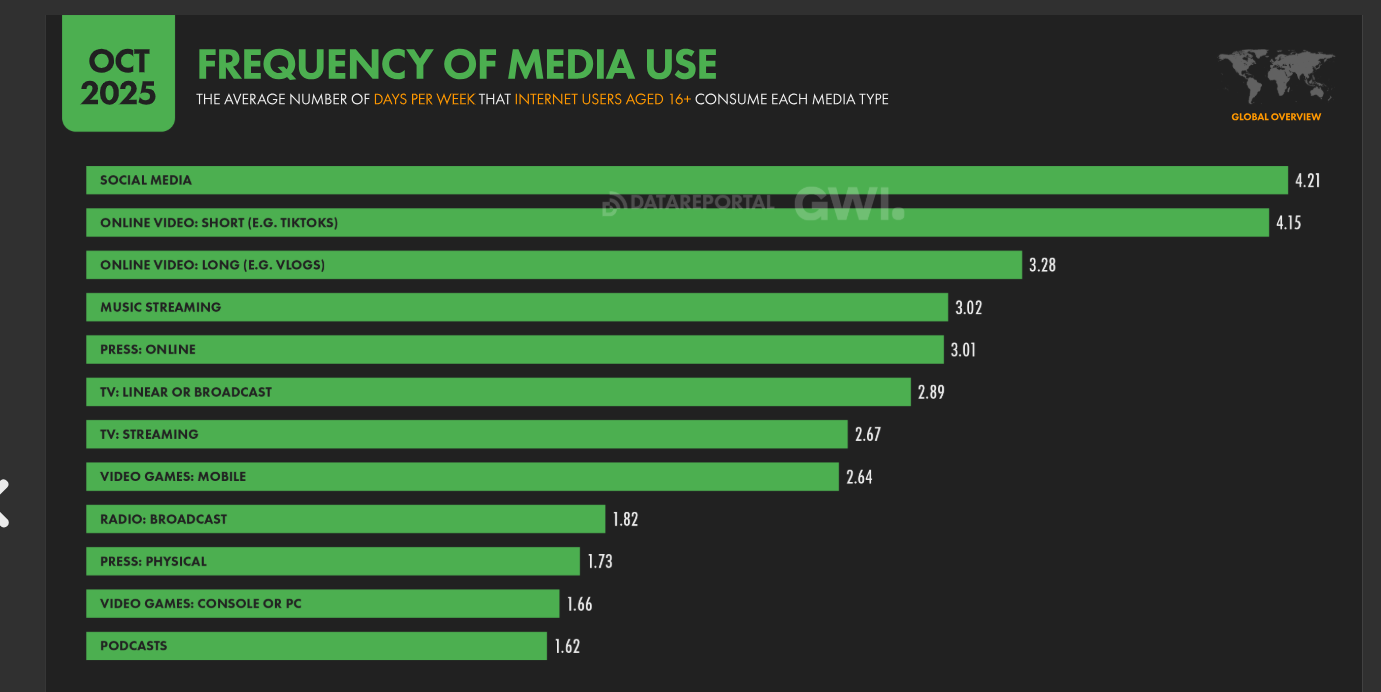
What makes matters more concerning is that despite more than 5.66 billion people using social media today, your brand’s metrics and numbers don’t go up:
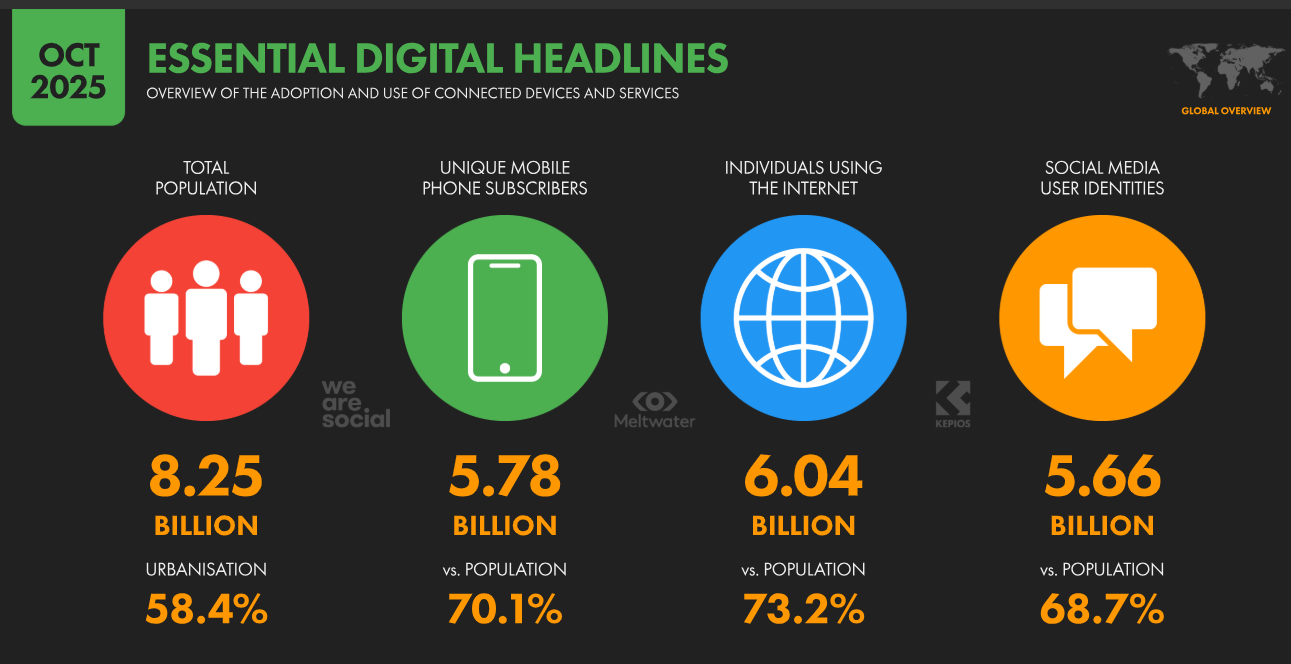
When two in three people worldwide are actively consuming content, social media stops being a side channel and becomes a core business priority.
It sits at the center of how people discover, evaluate, and choose brands.
Perhaps, what’s missing from your end is driving social media integration.
If you want your effort to translate into real visibility, scattered campaigns will not get you there. Disconnected platforms will not either.
You need a unified approach that ties your social media channels directly to your marketing goals, so your audience can find your brand, understand its value, and take action.
In this guide, you’ll learn how social media integration becomes that system, expanding your reach and bringing focus to every marketing decision you make.
What is a Social Media Marketing Strategy?
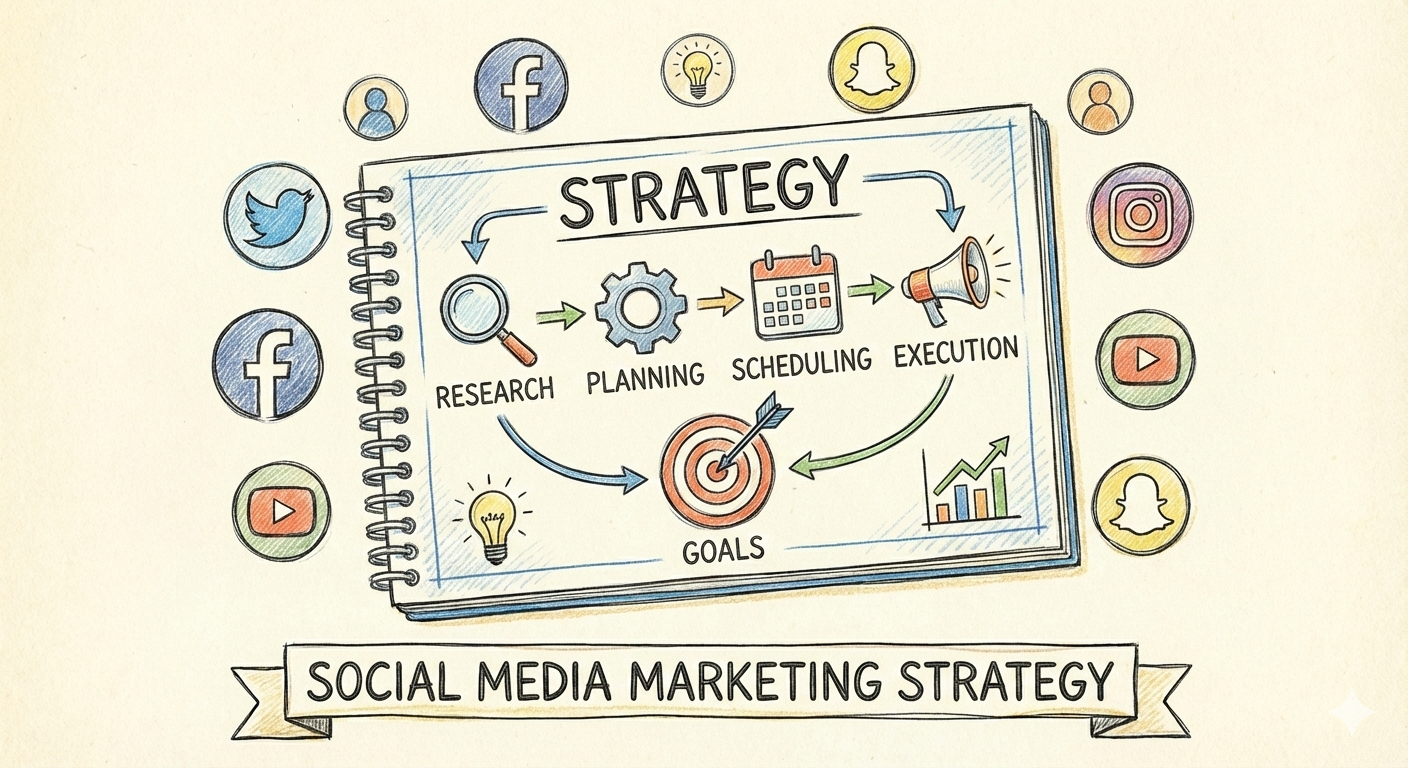
A social media marketing strategy is a documented system that defines how your brand uses social platforms to support measurable business objectives.
At its core, it aligns four operational layers:
- Audience architecture: who you target, where they spend time, and how they behave across platforms
- Content design: what you publish, why it exists, and how each asset supports awareness, consideration, or conversion
- Channel execution: how each platform is used based on its strengths, formats, and algorithms
- Performance measurement: how success is tracked through reach, engagement, traffic, leads, and revenue attribution
A social media marketing strategy is a structured framework that connects platform activity to marketing outcomes. A proper strategy defines KPIs, establishes content governance, standardises brand voice, integrates paid and organic efforts, and maps social touchpoints to your broader customer journey.
5 Challenges Entrepreneurs Face with Marketing and Social Media
If your social media efforts feel all over the place, you’re not alone.
Most entrepreneurs hit the same walls: limited time, unclear results, and too many platforms pulling attention in different directions.
As you can imagine, these challenges slow momentum and make it harder to build a consistent social media marketing strategy.
Here’s what’s getting in your way and how to respond:
1. You Lack Confidence in Your Marketing Direction
Many entrepreneurs struggle because they don’t feel confident in planning and executing marketing activities.
-
54% of small business owners report needing help specifically with social media marketing. This shows that lack of expertise is a major barrier to growth.
Pro tip: Start with a performance-focused content plan. Identify the formats that generate the most engagement over a 30-day period and double down on them. Set a simple dashboard to track what’s working. The idea is to focus less on doing everything and more on doing one thing well.
2. You Struggle to Grow Followers and Generate Leads
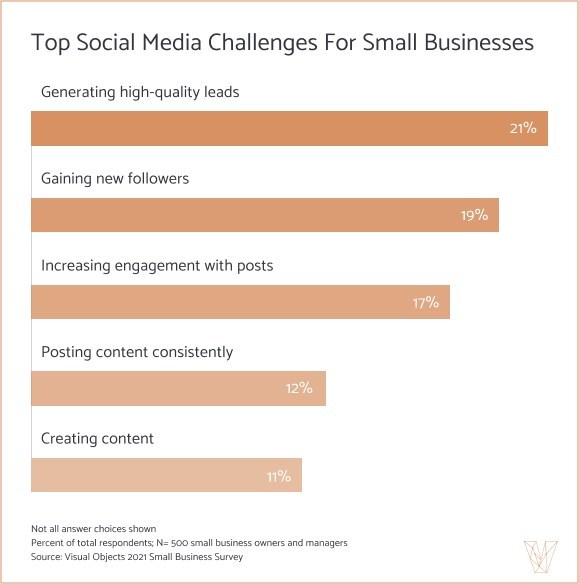
Small businesses consistently find it hard to build traction with followers and interactions:
-
Nearly 19% struggle to grow followers and engagement, while 21% cite generating leads from social media as their top challenge.
Pro tip: Focus content on engagement triggers. Audit your posts for formats (think: video, carousel, stories) that attract replies, saves, and clicks. Prioritise these formats that consistently deliver measurable engagement.
3. You Don’t Have Enough Time to Do It Properly
Between running your business and managing operations, marketing often becomes more reactive instead of planned.
Pro tip: Batch content and commit weekly planning time. Block one hour each week purely for planning and scheduling. Create a simple content calendar that lets you draft once and publish multiple times.
4. Your Budget Feels Too Tight for Real Results
Marketing execution often stalls because budgets and specialised staff are tight.
-
63% of senior marketing leaders say budget and resource restraints hinder strategic planning and execution.
Pro tip: Prioritise allocation where you see early traction. Start with low-cost formats such as organic engagement plus minimal paid boosts, and scale spend as results justify it. This reduces waste and forces clearer value assessment.
5. Too Many Platforms Are Diluting Your Effort
The average user today jumps between multiple social networks every month, which makes consistency harder for brands big or small.
- Users now engage with 6 or 7 different social networks per month. As an entrepreneur, this significantly increases complexity in scheduling and driving variable social content.
Pro tip: Identify 2–3 platforms where your target audience is most active and commit there first. Standardise content themes and repurpose them intelligently for each network without losing message clarity.
How to Put Social Media Integration into Practice: 5 Tips to Help You Get Going
Most site owners don’t realise there’s a gap in their marketing and social media until they look closely.
Traffic comes in from social. Bounce rates stay high. Enquiry forms stay quiet.
Meanwhile, content keeps getting pushed because that’s what you’re “supposed” to do. Over time, social media becomes busy work instead of a growth channel.
The problem typically lies in coordination: Your social posts tell one story. Your website tells another. Your emails follow a third direction.
And if you think customers will piece things together on their own, remember most won’t bother.
Social media integration closes this gap.
It forces every channel to support the same objective: helping someone understand your offer quickly and take the next step with confidence.
When your platforms work together, visitors stop wandering and start converting.
Here are five tips on how to integrate your social media strategy easily:
Tip #1: Align Your Content with Your Business Goals
Who is it for: Site owners who generate activity on social but cannot clearly trace enquiries or revenue back to it.
You may be posting consistently, but when someone asks where your last five enquiries came from, the answer is vague. That’s usually a sign your content is not tied to a defined outcome.
Social media only becomes strategic when it supports a specific commercial objective. Without that, it can feel like a purely maintenance chore.
How to implement this:
- Choose one commercial goal for the next 30 to 60 days. Be precise. “More visibility” is vague. “10 qualified enquiries for our consulting package” is usable.
- Identify one offer you want to push. Do not rotate between services during this period.
- Map your posts to that offer. If you provide accounting services for SMEs, every post this month should support that specific service rather than drifting into unrelated topics.
- Replace generic bio links with a direct link to the relevant service page or booking form.
- Review your last 20 posts and mark which ones directly support a revenue-generating service. If fewer than half do, your effort is diluted.
Ask yourself:
- Can I connect this week’s posts to a specific revenue target?
- If someone clicks through, does the landing page continue the same message?
- Are we promoting too many services at once?
- Which single offer brings the highest margin or repeat business?
- Would a new visitor understand what we actually sell within 10 seconds?
This is where social media integration begins. Content, offer, and destination need to line up. When they do, you stop guessing and start seeing patterns in enquiries.
Tip #2: Standardise Your Brand Voice Across Platforms
Who is it for: Business owners who update their website carefully but treat social content as quick posts, which leads to mixed messaging and confused visitors.
You’ve probably spent time polishing your website copy. Then social posts go out in a different tone, different wording, and sometimes even describe your services differently. When someone moves from Instagram to your site, it feels like stepping into another business.
Remember, people notice tone shifts more than you think. They also remember brands that sound the same everywhere.
Consistency builds familiarity and familiarity builds trust.
How to implement this:
- Copy one paragraph from your main service page and use it as your baseline description everywhere. Bio sections, pinned posts, email templates, and campaign captions should all start from that same core wording.
- Pick three words that describe how your business communicates. Practical examples: straightforward, knowledgeable, approachable. Use them as a filter before publishing anything.
- Lock in one version of your service name and CTA. If your website says, “Request a quote,” use that phrase across social and email instead of rotating between alternatives.
- Save five high-performing website phrases and reuse them in captions. This keeps your language grounded in what already converts.
Ask yourself:
- Does my social bio explain my service the same way my website does?
- Would someone recognise both channels as coming from the same business?
- Do our posts sound like how we speak to customers on calls?
- Which phrases do clients repeat back to us?
When your wording stays consistent, visitors move faster from interest to enquiry because they don’t need to re-learn who you are at every touchpoint.
Tip #3: Turn Social Traffic into Clear Next Steps
Who is it for: Entrepreneurs who see clicks coming in from social but rarely hear the phone ring or receive enquiry forms.
Most site owners assume that once someone reaches their website, the hard part is done.
In reality, this is where most opportunities fall apart. Visitors arrive from social already curious, but they’re met with broad messaging, multiple options, or unclear calls to action.
Instead of moving forward, they may choose to leave without ever reaching out.
So, use your website to guide your customers towards a decision.
How to implement this:
- Link every campaign to one focused page built around a single service or offer. Avoid sending people to your homepage unless it clearly funnels visitors to contact.
- Add a visible contact button near the top of your landing page. Booking links and enquiry forms should appear before someone starts scrolling.
- Write one short line under each form that explains what happens next, for example: “We’ll reply within one business day with pricing and availability.” This removes hesitation.
- Test your landing pages on your phone every week. Check loading speed, button visibility, and form usability. Most social visitors arrive on mobile.
Ask yourself:
- Which page do people reach after clicking from social?
- Is the next action obvious within a few seconds?
- Does the page explain who the service is for?
- Are visitors forced to search for contact details?
Social traffic works best when every click leads to one clear outcome.
Tip #4: Build a Weekly Review Habit
Who is it for: Founders who post consistently but rarely sit down to review what actually worked.
Most business owners stay focused on publishing. Very few make time to evaluate results. Without regular review, the same content patterns repeat, even when they produce little return.
A short weekly check gives you control over your direction instead of leaving performance to chance.
How to implement this:
- Block 20 minutes on the same day each week to review results. Treat it like a business meeting.
- Open your analytics and record three numbers: social traffic to your site, enquiries generated, and which posts drove clicks.
- Identify the top two posts of the week and write down what they have in common, such as topic, format, or call to action.
- Remove/pause formats that haven’t produced clicks or enquiries in the last 30 days.
- Keep a simple note of customer questions from emails, calls, or DMs and turn those into future posts.
Ask yourself:
- Which posts drove action this week and what topics sparked real conversations?
- What content fell flat?
- Where did new leads come from?
- What will I change in next week’s content plan?
Tip #5: Reduce Platform Sprawl and Focus Your Effort
Who is it for: Business owners trying to stay active on too many platforms at once and feeling stretched thin as a result.
Most SMEs don’t fail at social media because they lack ideas. They struggle because attention is split across one too many channels.
One post goes on Instagram. Another on LinkedIn. Something half-finished lands on Facebook. None of it gets the focus needed to drive enquiries.
Spreading yourself across every platform usually leads to shallow results everywhere.
How to implement this:
- Review the last 60 days of activity and identify which platforms brought website visits or enquiries. Keep the top two. Pause the rest.
- Commit to posting consistently on those two platforms for the next 30 days before adding anything new.
- Standardise your content themes so the same core message appears across both channels, adjusted only for format.
- Repurpose posts instead of creating everything from scratch. One idea can become a short video, a carousel, and a text post.
- Schedule content in batches so platform management doesn’t interrupt your daily business work.
Ask yourself:
- Which platforms actually bring visitors to my site?
- Where do customers message/comment most often?
- Am I maintaining platforms that produce no enquiries?
- Could I improve quality by focusing on fewer channels?
- What would happen if I committed fully to just two platforms for a month?
Social media integration moves you from managing platforms to orchestrating relationships. It aligns your channels so your message is consistent, your voice is recognisable, and your audience doesn’t have to piece together who you are. Reportedly, brands with integrated marketing communication approaches establish lasting emotional connections with consumers and boost brand value.
Bonus: Your 30-Day Social Media Integration Plan to Bookmark
Primary Goals (Fill This In – Limit to 2-3 goals)
Example: Increase service enquiries from social
Week 1: Align Your Foundation
Day 1: Define Your Offer
☐ Write one sentence describing your core service
☐ Identify who it’s for
☐ Decide your single CTA (Book call/Enquire /Visit page)
Day 2: Audit Website Messaging
☐ Review homepage headline
☐ Check service page clarity
☐ Confirm CTA visibility
☐ Test mobile layout
Notes:
Day 3: Audit Social Profiles
☐ Update bio with your service + CTA
☐ Replace bio link with service page
☐ Pin one offer-focused post
☐ Remove outdated highlights
Day 4: Choose 2 Platforms
☐ Review engagement from last 60 days
☐ Select top 2 platforms
☐ Pause posting elsewhere
Day 5: Review Last 15 Posts
☐ Identify top 5 posts by clicks/replies
☐ Note topics that performed
☐ Drop formats with no response
Week 2: Build Your Conversion Path
Day 6: Create or Optimise Landing Page
☐ Clear headline
☐ Three benefit bullets
☐ Contact button above fold
☐ Simple form
☐ Mobile test
Day 7: Write Core Message
☐ One paragraph explaining your service
☐ Save for reuse across platforms
Day 8: Plan 9 Posts
☐ 3 problem-awareness posts
☐ 3 solution posts
☐ 3 action posts
☐ Same landing link on all
Day 9: Batch Create Content
☐ Write captions
☐ Prepare visuals
☐ Add CTAs
Day 10: Schedule All Posts
☐ Load into scheduler
☐ Confirm links work
☐ Set publish times
Week 3: Track and Improve
Day 11: Set Tracking Sheet
Columns:
- Date
- Platform
- Clicks
- Page visits
- Enquiries
Day 12: First Performance Review
☐ Check link clicks
☐ Check landing page visits
☐ Record enquiries
Day 13: Improve Landing Page
☐ Clarify headline
☐ Add FAQs
☐ Simplify form
☐ Improve CTA text
Day 14: Refine Content Direction
☐ Double down on high-response topics
☐ Remove low-performing formats
Week 4: Systemise What Works
Day 15: Update Website Copy
☐ Match homepage language to social posts
☐ Align service descriptions
☐ Add CTA to footer
Day 16: Update Email Signature + Templates
☐ Add landing page link
☐ Use same core message
Day 17: Create Weekly Review Routine
Schedule recurring task:
☐ Review metrics every Friday
☐ Adjust next week’s content
Day 18: Identify Winning Content
☐ Top 3 posts
☐ Top traffic source
☐ Best converting page
Day 19: Expand What Works
☐ Increase posting of winning format
☐ Test small paid boost if relevant
Final Days: Evaluate
Day 30: Review Results
☐ Compare Day 1 vs Day 30 enquiries
☐ Check traffic growth
☐ Assess message clarity
☐ Decide next 30-day focus
Weekly Dashboard (Pin This in Notion)
This Week’s Focus:
Top Performing Post:
Landing Page Visits:
Enquiries Generated:
One Improvement for Next Week:
Align Your Marketing and Social Media Strategy with Crazy Domains
The point is, marketing and social media only work when they move in the same direction.
A strong social media marketing strategy gives you clarity on what to publish and why.
Social media integration gives your strategy a solid structure by connecting your platforms to your website, campaigns, and customer journey.
Together, they help you turn effort into progress you can track.
Your website sits at the center of it all. It’s where social traffic arrives, understands your value, and takes action.
Crazy Domains empowers you to manage your domain, hosting, and business email in one place, so visitors coming from social media have a clear path to contact you (or learn more).
When marketing and social media support the same goals, your brand becomes easier to find, easier to trust, and easier to choose. Sign up now to get started!
FAQs
How do you build a social media marketing strategy that drives business results?
Start with one measurable goal such as leads, traffic, brand visibility, and so on. Choose two or three platforms where your audience already spends time. Define a small set of content themes tied to that goal and publish consistently. Review performance weekly. Track reach, clicks, and inquiries. Adjust based on what brings engagement and real interest.
What does social media integration mean for your business?
Social media integration connects your platforms with your website, email marketing, and analytics. It creates a consistent experience for your audience and gives you clearer insight into what drives action. When everything is connected, it becomes easier to guide people from discovery to inquiry.
How many social platforms should you focus on?
Two or three platforms are enough for most small businesses. Select channels based on customer activity. Build consistency there first. Expand only when you have the time and resources to manage additional platforms properly.
How does your website support social media integration?
Your website is where social traffic should lead. Each campaign should point to a specific page, whether that’s a service page, product listing, or contact form. Your site needs fast loading, simple navigation, and clear calls to action. Many small businesses use providers like Crazy Domains to manage domains, hosting, and business email in one place, which helps streamline this process.
What can you do when social media growth slows down?
Review your last month of content. Look for posts that earned replies, saves, clicks, the like. Realign your team’s effort to focus on these specific formats. Add one clear action to every post and schedule content in batches to maintain consistency.
How do you turn followers into leads?
Connect posts to landing pages or inquiry forms. Use direct calls to action such as booking a call or downloading a resource. Track clicks and conversions so you understand what brings genuine interest.