| Shoppers gain clarity and confidence through real-time visual choices, accurate rules and instant pricing. Teams benefit from fewer errors, faster quoting and smoother coordination across sales, manufacturing and support. |
Headlines, calls to action, and forms sit at the critical hand-off points of every digital journey. They influence whether a visitor keeps reading, takes the next step, or completes the sale. Because each element can usually be edited without a full redesign, they offer the fastest, lowest-risk route to measurable wins.
Teams, however, often stumble by changing several elements at once, tracking the wrong metric, or stopping experiments too early. The goal here is clear: give you a concise, repeatable playbook and ready-to-use test templates that any SME, agency or developer team can deploy today.
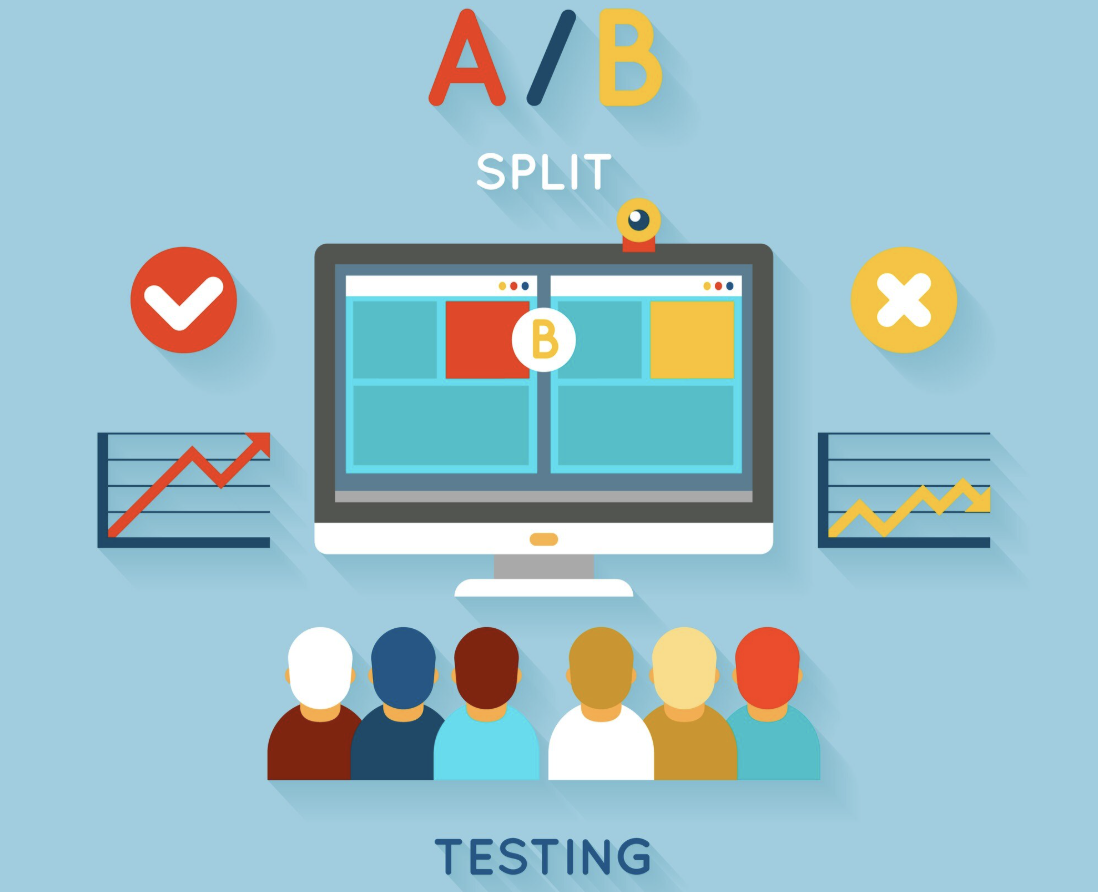
A Simple A/B Testing Framework
Before running any experiment, make sure every stakeholder agrees on the hypothesis, the success metric and the traffic plan. That discipline prevents wasted impressions and inconclusive results.
Define a Clear Hypothesis and Primary Metric
- One-line hypothesis template: If we change X, then Y (primary metric) will increase because of Z.
- Typical primary metrics:
- Headline → click-through to CTA
- CTA → click-to-purchase
- Form → completion rate
- Track 1–2 supporting metrics, including bounce rate, time on page or error events to catch unintended side effects.
Prioritise Tests (Impact × Effort × Confidence)
- Use a simple matrix: High impact + low effort = run first. Headline or CTA copy swaps usually top this list.
- Map engineering effort: a visual edit may take minutes; server-side form logic could take days.
- Sequence tests (headlines → CTAs → forms) to build learning without draining traffic on complex experiments too early.
Sample Size, Duration and Traffic Considerations
- Forms often need larger samples and a longer run because fewer users reach them.
- Minimum rules: Let a test run at least one full weekday cycle; never declare a winner in the first 24 hours.
- Low traffic? Pool similar pages or run paired sequential tests, then validate with qualitative insights.
Segmentation and Experiment Scope
- Split by device, campaign or user intent only when you suspect behaviour differs meaningfully.
- Over-segmentation starves every segment of power; find a broad winner first, then run targeted follow-ups.
| Also Read: How to Use A/B Testing in Website Builders Without Developer Support |
Headline A/B Tests: Fast Wins and Variant Strategy
Headlines are prime because a single word can swing attention. Their edit cost is near zero, so you can iterate quickly.
- What to test: Tone (benefit vs curiosity), specificity (numbers), social proof cues, urgency, and question vs statement formats.
- Variant sets: Launch 3–4 variants grouped by messaging intent, like benefit-led, curiosity-led, or numeric/stat, so you learn frameworks, not just phrases.
- Measurement:
-
- Primary metric: Click-through or scroll depth
- Supporting: Bounce rate and downstream funnel conversion
Practical examples
-
- Benefit-led: “Save 20 minutes on payroll today”
- Curiosity-led: “Your payroll process is costing you—find out how”
- Numeric: “3 payroll mistakes SMEs make every month”
Engineering effort: No-code visual editors or CMS copy changes are usually enough, making headline tests ideal first candidates.
Qualitative boosters: Heatmaps and on-page polls clarify why a headline won, feeding your next iteration.
| Also Read: AI-Generated Content Flooding Headlines: Impact on SEO and Branding |
CTA A/B Tests: Wording, Design and Placement
A CTA carries the click that justifies your marketing spend. Beyond wording, visual and contextual cues heavily influence performance.
- What to test: Microcopy specificity (“Get quote” vs “Start free trial”), button colour/contrast, size, icon use, and proximity to trust signals.
- Isolate variables: Change one element per test, like copy, OR colour, OR placement, to attribute uplift confidently.
- Primary metrics: CTA click-through rate; optionally, click-to-conversion if the action triggers a high-value event.
- Example tests
- Label specificity
- Above-the-fold CTA vs inline placement
- CTA with reassurance copy (“No card required”) vs none
- Accessibility counts: Adequate colour contrast and keyboard focus aren’t mere compliance; they expand addressable users and raise conversion potential.
Form A/B Tests: Reduce Friction and Improve Completion
Forms close deals or lose them. Because they often require server work, plan form tests carefully.
- Key levers: Number of fields, field order, progressive disclosure, autofill, inline validation and error wording.
- Design notes
- Start with the highest-friction fields: email, phone, payment. Test optional vs required.
- Progressive disclosure: capture essential data first and reveal follow-up questions after intent signals.
- Metrics:
-
- Primary: Form completion rate
- Supporting: Time-to-complete, abandonment step
Engineering considerations: Forms may need server-side feature flags to avoid client-side flicker. Coordinate QA to ensure validation, analytics and privacy still function.
Privacy/compliance: Do not expose personal data in experiment logs; respect consent frameworks (GDPR, CCPA) when segmenting users.
When results are unclear: Pair quantitative figures with session replays to watch drop-offs and refine hypotheses.
Tool Selection: Choose Conversion Optimisation Tools That Fit Your Team
No single platform suits everyone. Match complexity to resources.
- Marketer-led, no-code editors: fastest for headline and CTA swaps.
- Feature-flag SDKs: best for developer-driven, server-side form tests.
- Enterprise suites: add personalisation and segmentation at scale.
Evaluate each option for ease of use, analytics integration, data export and privacy controls. When researching, include the phrase “conversion optimisation tools” to find platforms combining A/B testing with heatmaps and session replay, a powerful quantitative-plus-qualitative stack. Choose the simplest product that still enforces statistical rigour and minimises deployment friction.
Analyse Results: Combine Quantitative Winners With Qualitative Why
- Read the primary metric first. If clicks rise but downstream revenue falls, you may have a “false win.”
- Heatmaps and session replays reveal behavioural shifts and help confirm causality.
- Archive each test’s hypothesis, outcome and artefacts (copy, screenshots) so future projects draw on institutional memory.
- Decide and record the next action: roll out, iterate or stop.
Common Pitfalls and How to Avoid Them
- Multi-variable changes muddy attribution—test one variable at a time where possible.
- Never halt an experiment early; premature stopping inflates false positives.
- Watch for sampling bias from campaign traffic spikes or caching issues.
- Over-segmentation drains statistical power; prefer broad tests first, then segment follow-ups.
| Pro Tip: If your site runs through aggressive caching or a CDN, serve variants via server-side flags or unique cache-busting keys to guarantee users see consistent versions. |
Building Configurators That Sell Themselves
Effective A/B testing is a repeatable cycle: craft a focused hypothesis, secure a clean traffic split and start with quick headline wins before progressing to CTA prominence and form friction.
Pair quantitative results with qualitative tools to understand the why, and let an impact-effort-confidence matrix keep your roadmap honest.
Ready for a stable environment that loads fast and removes testing noise? Host your landing pages on Crazy Domains, streamline deployments and convert every learning into measurable uplift today.