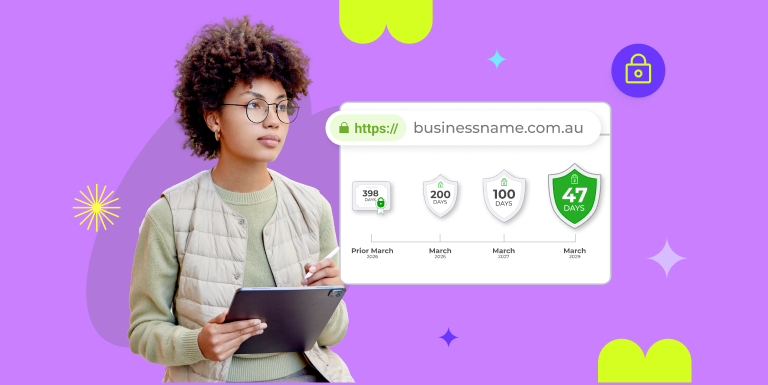
| The transition from legacy passwords to OAuth-based Secure Domain Management is the single most effective way to prevent “Domain Hijacking”, a sophisticated attack where hackers take control of your DNS to redirect traffic, steal emails, or ransom your brand. |
APIs have turned domain management from a manual admin chore into something you can plug directly into your stack. DNS updates can ship with code, renewals can be automated, and email security tools can manage SPF, DKIM, and DMARC on your behalf. It is powerful, but it also means many systems now have the keys to your online identity.
If those keys are just passwords or long‑lived API tokens buried in scripts, one leak can give an attacker quiet, high‑impact control over your domains. OAuth gives you a way to connect tools to your domain portfolio while staying in control of who can do what and for how long. Used well, it turns risky, opaque integrations into something you can govern, audit, and trust.
Why Domain Management Integrations Need Strong Authorisation, Not Just Strong Passwords
As your domain portfolio and tooling grow, your domain management surface quickly expands beyond a single login. Marketing, DevOps, security, and external partners all want programmatic access. That reality makes strong authorisation just as important as strong authentication.
On most modern teams, you see patterns like:
- CI/CD pipelines updating DNS for new environments.
- DMARC and email security tools monitoring and adjusting DNS records.
- Monitoring platforms querying DNS across hundreds of domains.
- Agency dashboards controlling redirects and records for many clients.
If all of those tools share one “super user” login or a static API key, your attack surface balloons. Keys end up in CI variables, chat logs, or old documentation. A single leaked credential can silently expose everything.
What is at stake goes far beyond a configuration tweak. Control over DNS lets an attacker:
- Redirect web traffic to phishing or malware sites.
- Intercept or reroute email flows by tampering with MX, SPF, DKIM, or DMARC.
- Impersonate your brand at scale.
Losing control of critical domains can break websites, stall transactions, disrupt support channels, and permanently damage trust.
OAuth fits this problem because it is built for delegated, scoped access instead of all‑or‑nothing credentials. It lets you grant specific tools exactly the domain permissions they need, for a limited time, without ever sharing your account password.
Review how your current tools connect to your domain management platform. If they still rely on shared credentials, it is time to plan a safer OAuth‑based approach.
Core OAuth Concepts Applied to Domain Management
OAuth is an authorisation framework that lets one application access another application’s resources on a user’s behalf, using tokens instead of passwords. In domain management, that means a tool can safely call domain APIs without ever knowing your login details.
The mapping is straightforward:
- Resource owner: your organisation that owns the domains.
- Client: any tool that needs to manage DNS, WHOIS, renewals, or DMARC (for example, CI pipelines, dashboards, monitoring).
- Resource server: your registrar or domain management API.
- Authorisation server: the component that issues and validates tokens.
This matters because different tools and teams need different levels of access. Your DMARC tool may only need to read and occasionally adjust DNS TXT records. Your billing automation may only need permission to renew domains. A central admin might need full access, but only for specific accounts or tenants.
OAuth scopes and tokens let you model that granularity per integration instead of handing out one master credential. You can also revoke or rotate access per app without touching everything else.
Because domains are core business assets, OAuth configuration should always follow your vendor’s documentation and, where possible, be reviewed by security or IT. Misconfigurations at this layer can be just as dangerous as a leaked password.
Token Lifecycle Hygiene for Safer Domain Integrations
Even perfect scopes cannot help if powerful tokens live forever or are stored carelessly. Token lifecycle hygiene is critical for domain security.
Short-Lived Access Tokens with Sensible Refresh Strategies
Access tokens that can modify DNS or renew domains are extremely sensitive. The longer they live, the longer an attacker can abuse them if they are stolen.
A safer pattern is:
- Use short‑lived access tokens for all domain APIs, so each token has a narrow time window.
- Pair them with refresh tokens when longer sessions are necessary, such as background sync tasks.
- Implement refresh token rotation, where each refresh consumes the current token and issues a new one. This reduces the chance that a stolen refresh token can be reused undetected.
- Revoke refresh tokens on any suspicious behaviour, such as sudden logins from unusual locations or unexpected bursts of failed API calls.
Secure Storage and Transmission of Tokens
How and where you store tokens is just as important as how you obtain them.
For browser-based apps:
- Prefer secure, HttpOnly cookies for tokens over localStorage. HttpOnly cookies are not directly accessible to JavaScript, which reduces exposure to XSS attacks.
For backend services:
- Store client secrets and tokens in a secure vault or encrypted configuration system, not in plain-text environment variables, code, or config files.
General practices:
- Always use HTTPS for token exchange and API calls.
- Avoid logging full tokens. If you must log them for debugging, mask or truncate sensitive parts.
Revocation and Self-Service Controls
Revocation is your emergency brake when something goes wrong.
At the platform level, you should be able to:
- Revoke individual access tokens, refresh tokens, or entire OAuth clients through an admin interface or API.
- View a list of all connected apps, the scopes they hold, and when they were last used.
For organisations, add periodic reviews of connected apps and tokens into your domain security routine so integrations you no longer use do not quietly retain powerful access.
Add a recurring review of connected apps and tokens to your domain security checklist so old integrations do not quietly retain powerful access.
| Also Read: 6 Key Reasons to Transfer Your Domain |
Practical Implementation Checklist (Without the Fluff)
For architects and developers planning OAuth for domain management, use this checklist as a baseline:
- Classify each integration as either:
- Service-to-service automation, or
- User‑consented access.
Match them to Client Credentials or Authorisation Code + PKCE accordingly.
- Define domain-specific scopes, such as dns:read, dns:edit, domain:renew, and whois:read, and avoid all‑access scopes by default.
- Enforce short-lived access tokens with secure refresh token handling, including rotation and revocation on suspicious activity.
- Lock down redirect URIs and implement CSRF protection using the state parameter in all browser-based authorisation flows.
- Store tokens securely:
- Use HttpOnly, secure cookies for browser clients.
- Use vaults or encrypted configuration stores for servers.
- Adopt robust SDKs and libraries that encapsulate best practices rather than hand‑rolling flow logic.
- Set up governance and monitoring:
- App approval workflows for high‑risk scopes.
- Periodic access reviews.
- Alerts for suspicious domain operations or token anomalies.
Take one high‑value integration, such as DNS automation or renewals, and upgrade it to OAuth with scoped access before extending the pattern across all your domain tools.
Secure, Scalable Domain Management with OAuth
OAuth gives you a way to integrate domain management deeply into your systems without falling back on brittle, over‑privileged credentials. By selecting the right flows, designing domain‑specific scopes, and enforcing solid token hygiene, you dramatically reduce the impact of inevitable leaks, misconfigurations, or compromised apps.
The payoff is not only security but also clarity. Each internal team, tool, and partner gets exactly the access they need, in a way that you can track, audit, and revoke. That level of control is fast becoming an expectation from customers, regulators, and security-conscious partners alike.
If you manage many client domains, choose a provider that supports API‑first, OAuth‑secured domain management. Platforms like Crazy Domains can help agencies and SMEs automate portfolios without relying on shared logins.