Today, your online and offline identities are deeply intertwined.
What once belonged to paperwork and government records now extends to how you move across the internet.
Every site you visit, the account you create, and the product you browse or buy all shape your digital identity. In practice, your digital presence is far more layered.
There’s the version of you that you intentionally build, such as your social profiles, usernames, or posts. And then there’s the version built from your actions: the products you research, the links you click, the times you’re active, and even how long you linger on a page.
For years, regulators have attempted to impose limits on how far this can extend. Cookie notices, GDPR, opt-ins, and data disclaimers were created to give people back some control.
Blockchain domains are starting to change that. And Web3 domain ownership is forcing a rethink. Digital identity in a decentralised ecosystem is all about who owns it. With tokenised domain names, the user becomes the operator. You manage the data, the access, and the identifiers tied to your online presence.
In this guide, we’ll walk through what NFT domain names are, how to choose them wisely, and how they’re shaping the future.
What Are NFT Domain Names?
An NFT domain name is a blockchain-based identifier issued as a non-fungible token. Each domain, part of a broader category known as blockchain domains, is minted as a unique, verifiable asset directly tied to a user’s wallet.
Unlike traditional domain names managed by registrars and subject to renewals or centralised control, NFT domains are owned outright by the holder of the corresponding private key.
The domain’s metadata, ownership, and transaction history are stored directly on the blockchain. This ensures the domain is:
- Immutable: records cannot be tampered with
- Verifiable: anyone can audit the domain’s provenance and activity
- Secure: only the controlling wallet can authorise changes/transfers
The takeaway: Once registered, the domain cannot be modified, reassigned, or revoked without the owner’s explicit cryptographic signature. This structure gives the holder full, uninterrupted control over the domain and any services/content attached to it.
| Also Read: How To Manage a Blog Post |
What Are the Advantages of Decentralised Domains?
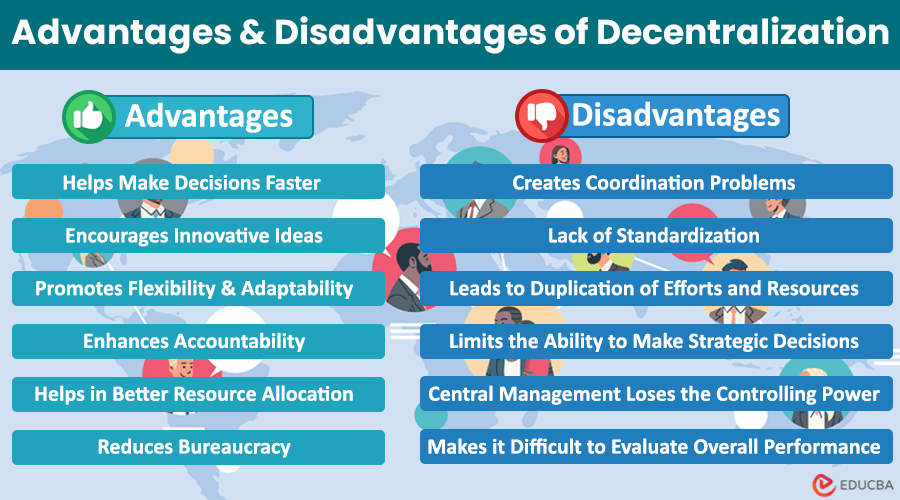
Let’s be clear: Owning a decentralised domain can seem like a technical upgrade but it’s essentially a shift in how you manage and protect your presence online.
Traditional domains come with renewal deadlines, platform risk, and third-party dependency. In contrast, decentralised domains give you the tools to build a digital identity that stays under your control.
Here are the advantages of NFT domain names:
1. Permanent Ownership + No Renewals
You buy it once. That’s it. No monthly fees or annual renewal notices for that matter. The domain sits in your wallet like any other digital asset, under your custody. This also means:
- You don’t rely on a registrar to keep it active
- You hold the keys, and as long as your wallet exists, so does your domain.
2. Direct Access Without Intermediaries
You don’t need to ask permission to move, update, or repoint your domain. Changes happen on-chain. This means:
- No support ticket to open
- No registrar delays
- No DNS propagation waiting period
You sign the transaction, and the update happens. This level of autonomy gives you faster control over where and how your domain works.
3. Multi-Purpose Use
A decentralised domain can receive payments, act as a username, or log you into Web3 apps. It becomes a single, consistent identity across networks. It eliminates the need to manage separate credentials across different tools.
4. Proof of Ownership You Can Verify
Every domain comes with a transaction history that’s publicly visible and tamper-proof. That means nobody can dispute ownership, and nobody can transfer it without your knowledge. It’s a cryptographic signature tied to your wallet. For businesses, that translates to credibility, and for individuals, it means better security.
5. No Centralised Points of Failure
If a domain registrar goes down, your traditional domain can disappear with it. Decentralised domains remove that risk. They run on blockchain networks, which means there’s no single point that can be compromised or even taken offline. Your domain stays live even if the original provider disappears.
6. Portability Across Platforms
You’re not locked into a single ecosystem. You can transfer your domain between apps, tools, and networks without needing permission from anyone. In other words, it’s interoperable. This is important if you’re building a brand that you don’t want to be tied to a specific company’s infrastructure.
How to Choose the Right Decentralised Domain Provider?
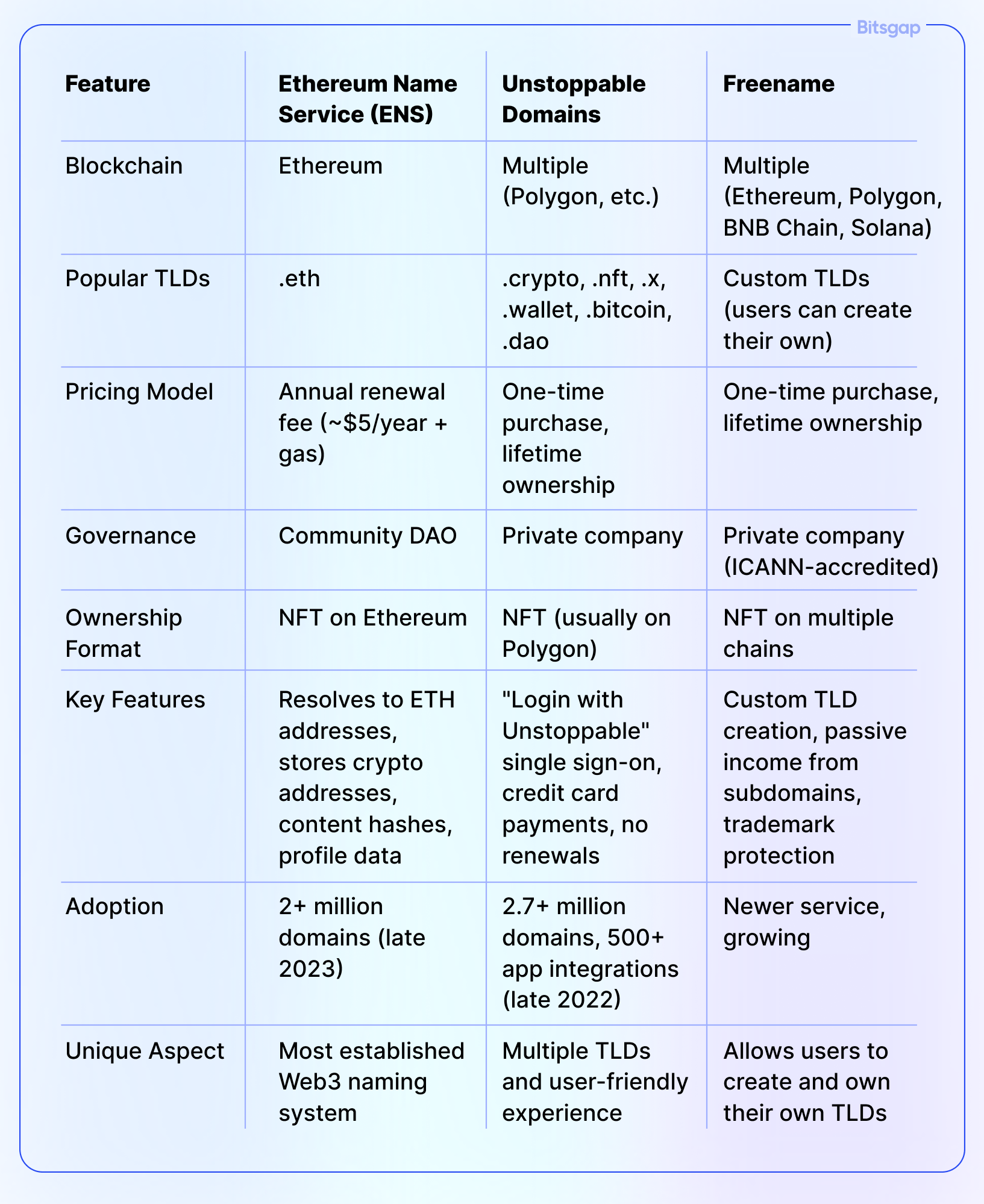
Not every decentralised domain provider operates the same. If you’re serious about owning your digital identity, the provider you choose will impact everything—from how the domain functions to how future-proof it is.
Here’s how to evaluate your options like a product owner:
Tip #1. Define What You’re Solving For
Start with intent. What role will this domain play?
- Personal or brand identity across platforms?
- Simpler crypto transactions?
- Hosting decentralised content?
- A secure, verifiable login for dApps?
Clarify this first. It will narrow your choices to providers that support your actual use case.
Tip #2. Look at Wallet and Blockchain Compatibility
Not all blockchain domains support every wallet or blockchain network. Ask:
- Does the domain support the wallets your users already rely on, such as MetaMask, Coinbase Wallet, or Ledger?
- Is it tied to a single blockchain, or does it support multiple chains?
- Will gas fees (payments required to process and validate transactions on a blockchain) affect adoption or usability for your audience?
3. Evaluate Integration Capabilities
The right provider should offer features that turn it into a functional part of your identity system:
- Reverse records that show your domain instead of a wallet address
- IPFS or decentralised storage support to connect content
- Metadata fields for public contact info, social profiles, or custom tags
- Login compatibility with apps that support domain-based authentication
If you plan to use the domain beyond holding it, focus on what the infrastructure lets you build (and not just what it promises).
4. Prioritise True Ownership
Ownership means control. So, you must avoid providers that:
- Require you to manage domains through a centralised dashboard
- Don’t allow wallet transfers
- Limit editing or record updates through closed systems
Pro Tip: If you can’t repoint, sell, or manage the domain directly from your wallet, it’s not truly decentralised.
5. Assess Ecosystem Strength and Long-Term Viability
A domain is only as valuable as the ecosystem around it. Look for signs that the project is built to scale and not just survive the next funding cycle:
- Well-maintained developer tools and clear documentation
- Native support across major wallets, browsers, and dApps
- Governance that isn’t controlled by a single company or founder
- Adoption of open standards and active community contribution
Pro Tip: Remember, you’re investing in infrastructure. Pick a registry that will keep working even if the original team moves on.
6. Confirm Web Compatibility
Some domains work out of the box in Chrome or Brave. Others require plugins or custom DNS settings. For public-facing domains, check:
- Browser support (mobile and desktop)
- Web2–Web3 bridging options
- DNS resolution through standard links or custom resolvers
Pro Tip: If it takes effort to load, users won’t stick around. So, you should prioritise seamless access at all costs.
How Are NFT Domain Names Used in Real-World Scenarios?
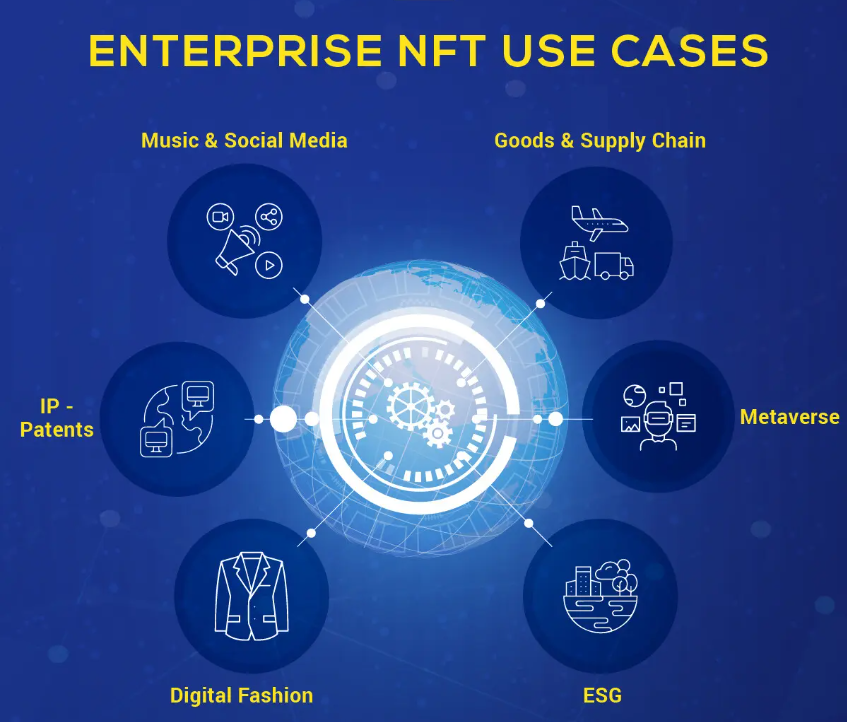
Now that you understand the benefits, the next question is obvious: “What can you actually do with an NFT domain name today?”
The truth is, these domains are already powering a range of use cases that make digital experiences faster, safer, and more secure.
So, whether you’re a business owner, developer, creator, or casual user, there’s a practical way to put decentralised domains to work.
Real-World Use Cases for NFT Domain Names
| Use Case | Description | Who It’s Useful For |
| Web3 Login Credentials | Use your domain to log into dApps without a password. | Developers, regular users, DeFi participants |
| Wallet Address Replacement | Replace long wallet addresses with human-readable names (e.g., john.eth). | Crypto users, NFT traders, DAOs |
| Branded Payment Gateway | Accept crypto payments directly to your domain. | Freelancers, e-commerce stores |
| Cross-Platform Identity | Use the same domain as a consistent username across platforms. | Content creators, community builders |
| Decentralized Website Hosting | Host content on IPFS and connect it to your NFT domain. | Developers, bloggers, Web3 projects |
| DAO or Brand Representation | Use a domain as the public face of a DAO or on-chain brand. | DAO founders, brand managers |
| Portfolio or Profile Hub | Build a landing page tied to your domain showcasing NFTs or links. | Artists, creators, consultants |
| Token-Gated Access | Grant access to content or tools only to holders of a specific domain. | SaaS products, newsletters, courses |
| Also Read: Here’s what the Google SSL update means for you |
8 Best Practices to Make the Most of Your NFT Domain
Owning a decentralised domain is one thing. Using it strategically is another ballgame altogether.
Follow these core principles to get the most from your NFT domain name:
1. Choose the Right Wallet + Secure It First
Before you register or transfer a domain, secure your wallet and ensure it is permanent:
- Choose a hardware wallet or a trusted non-custodial wallet that grants full control over your private keys.
- Avoid storing domains on compromised wallets, as recovery is often impossible.
- Protect not just your domain name but your entire digital identity.
2. Register Domain Variations for Your Brand
If you’re serious about long-term use, don’t just register one domain:
- Secure multiple versions of your domain, including common misspellings and slight variations. This stops others from registering those domains and potentially misleading your customers.
- Consider registering domains with different extensions or formats relevant to your industry. This gives you the flexibility to expand or redirect traffic as your presence grows.
- Ask ChatGPT
3. Set Up Reverse Records
A reverse record ties your wallet address back to your domain, transforming complex alphanumeric strings into a recognisable name.
When interacting with dApps or wallets, users will see your domain instead of an obscure address. This simple step:
- strengthens trust
- boosts your credibility
- Ensures a consistent identity across every platform that supports Web3 authentication
4. Layer Your Domain with Purposeful Metadata
Your domain can be a living ledger of your digital identity. Infuse it with essential signals—public emails, social handles, and dedicated wallets—that act as trust anchors.
Some go deeper, embedding cryptographic fingerprints, such as PGP keys or developer footprints, like GitHub repositories. This metadata shifts your domain from a mere address to a dynamic persona, which is especially valuable if you’re carving out space as a creator, technologist, or independent consultant.
5. Connect It to a Live Page or Decentralised Website
Even a basic landing page can add significant value. Host your content on IPFS or another decentralised storage system and connect it directly to your NFT domain.
This transforms your domain into a living presence. Whether you showcase a portfolio, resume, curated links, or a business homepage, this signals to visitors that you’re actively engaged rather than simply holding a digital asset.
6. Stay Alert to Protocol and Tool Updates
The Web3 domain landscape changes rather quickly.
New protocols, standards, and integrations emerge regularly.
So, watch for updates from wallets, browsers, and platforms that support decentralised domains. Acting quickly to upgrade or switch to improved registry standards helps you stay compatible and gain a competitive advantage.
7. Don’t Fall for Management Scams
Many phishing attacks now target domain holders with fake renewal notices or wallet connection prompts:
- Never click links sent via unsolicited messages, even if they look legitimate.
- Manage your domain directly through the wallet or registry where you purchased it, and double-check domain settings before approving changes.
8. Use Domains Beyond Just Owning Them
Use your NFT domain as a tool, as opposed to a simple label:
- Employ it as a crypto payment address, a login key for decentralised apps, or a gatekeeper for exclusive content.
- Link it to your blog or Discord, or embed it in smart contracts.
Increasing your domain’s functionality strengthens your digital identity and makes it that much harder for others to copy or steal it.
Who Holds the Keys: How to Pick a Decentralised Identity Infrastructure That Works for You
Controlling identity across platforms shouldn’t rely on third-party gatekeepers. When a login provider changes policy, blocks access, or sunsets features, you lose users and trust.
Decentralised identity (DID) infrastructure offers a way to anchor digital ownership to a wallet or verifiable credential that your users control. You stay compliant. They stay in charge. Everyone wins.
Pro Tip: The infrastructure you choose, whether it’s based on blockchain, zero-knowledge proofs, or W3C Verifiable Credentials, directly impacts user experience, scalability, and your product’s interoperability across ecosystems.
Who is This For?
- Product managers building platforms where user data and access need to travel across devices and services
- Startup founders who want to offer login options without tying users to Big Tech credentials
- Platform engineers handling authentication, wallet integrations, or permissions in a decentralised app (dApp), loyalty system, or gated content platform
Who Holds the Keys: How to Pick a Decentralised Identity Infrastructure That Works for You
Controlling identity across platforms shouldn’t rely on third-party gatekeepers. When a login provider changes policy, blocks access, or sunsets features, you lose users and trust.
Decentralised identity (DID) infrastructure offers a way to anchor digital ownership to a wallet or verifiable credential that your users control. You stay compliant. They stay in charge. Everyone wins.
Pro Tip: The infrastructure you choose, whether it’s based on blockchain, zero-knowledge proofs, or W3C Verifiable Credentials, directly impacts user experience, scalability, and your product’s interoperability across ecosystems.
Who is This For?
- Product managers building platforms where user data and access need to travel across devices and services
- Startup founders who want to offer login options without tying users to Big Tech credentials
- Platform engineers handling authentication, wallet integrations, or permissions in a decentralised app (dApp), loyalty system, or gated content platform
5 Pro Tips to Integrate Decentralised Identity Without Disrupting Your Stack
Here are some actionable ways to introduce decentralised identity (DID) into your product without rewriting your entire infrastructure or overwhelming your users:
1. Start with a Testable Feature
Roll out wallet-based login or credentials on one surface where stakes are low, and usage is regular. Good candidates include: internal admin panels, loyalty dashboards, waitlist access, and beta programs. This gives you real user signals before touching the rest of your stack.
2. Match Identity Types to Your Product’s Permissions System
Think in terms of what your platform already understands: access levels, roles, tags, and cohorts. Issue credentials that plug into those without reworking your core logic. For example, a “verified customer” badge can grant access to gated content or advanced tools without requiring an additional database lookup.
3. Treat Wallets as Identity Anchors
Keep your architecture clean. Let the wallet prove identity, but store user preferences, history, or usage patterns in your own system. This separation makes audits easier and lets you stay compliant without having to handle private keys.
4. Make Recovery Paths Obvious from Day One
Lost access shouldn’t mean lost trust. Build a way for users to reset or reissue their credentials through methods that don’t rely on customer support. Social backup, one-time codes, or a recovery key tied to a secondary device can all serve as an alternative.
5. Don’t Pick Infrastructure Based on Hype; Instead, Pick Based on Control and Exit Options
Choose providers that don’t lock you into one ecosystem or one method of issuing credentials. You should be able to issue, update, and verify identity from your own backend without needing to touch a blockchain every time.
What to Ask Before You Commit?
- Can my team issue and verify credentials using our existing tech stack?
- Will we still be able to support users who don’t use wallets?
- What happens when a user loses access, or will you recover trust without starting over?
- Does this system rely on one provider or protocol that could disappear or change terms?
Own Your Digital Identity with NFT Domain Names
Web3 has reignited important conversations around privacy, online security, and digital identity—conversations that are now turning into real-world shifts.
Decentralised domains stand at the forefront of this change, handing control back to individuals and reducing reliance on centralised gatekeepers.
As blockchain-based DNS systems mature, they open real opportunities for brands to build secure, transparent identities that travel freely across platforms. This shift is underway now, and those who adapt early will set the standard for digital trust in the years to come.
If you want to own your presence rather than rent it, start exploring decentralised domains today. At Crazy Domains, we make it easy to register and manage your domain names, giving you the tools to take full ownership of your online identity in the Web3 era.
Whether you’re an individual creator, a forward-thinking startup, or a growing brand, our platform is built to support your journey into decentralised ownership. Get started today!
FAQs
What is a decentralised domain name?
A decentralised domain is a blockchain-registered identifier that functions similarly to a traditional domain name but exists outside the control of centralised registries. Ownership is cryptographically secured via a user’s digital wallet, and the domain record is stored on a distributed ledger.
How does a decentralised domain differ from a standard DNS domain?
Standard domains rely on centralised DNS infrastructure, regulated by ICANN and administered by registrars. Decentralised domains operate on peer-to-peer protocols, bypassing the hierarchical DNS system. They are minted as tokens (typically NFTs), do not require renewal fees, and are governed by smart contracts.
Why are decentralised domains relevant to digital identity?
They serve as user-controlled identity anchors, consolidating wallet addresses, metadata, and verified credentials under a single on-chain name. This eliminates reliance on third-party platforms for identity verification or access control, enhancing security and data sovereignty.
Can decentralised domains resolve like traditional websites?
Yes, through blockchain-integrated browsers or resolution layers like IPFS and ENS-compatible resolvers. However, they are not universally supported across all DNS infrastructures. Bridging tools are required to enable interoperability between Web2 and Web3 environments.
Is decentralised domain ownership permanent?
In most implementations, yes. Domains are minted on-chain as non-fungible tokens (NFTs) and transferred to the owner’s wallet. As long as the private key is retained, the domain remains under the holder’s control, without expiry or dependency on third parties.
What types of data or services can be linked to these domains?
Users can associate smart contract addresses, decentralised websites, social identifiers, content hashes, and verifiable credentials. They function as both address resolvers and metadata containers, extending beyond traditional web addressing into a multi-protocol utility.
Are decentralised domains interoperable with the existing internet infrastructure?
Not by default. Resolution depends on compatible layers such as ENS, Unstoppable Domains, or custom gateway integrations. Legacy systems require bridging mechanisms to interface with blockchain-native identifiers.
What are the technical requirements to register and manage a decentralised domain?
Users must have a blockchain wallet (such as an Ethereum-compatible one), access to a domain minting service or protocol (like ENS or UD), and familiarity with interacting with smart contracts. Management operations, including record updates and transfers, are executed via wallet signatures.